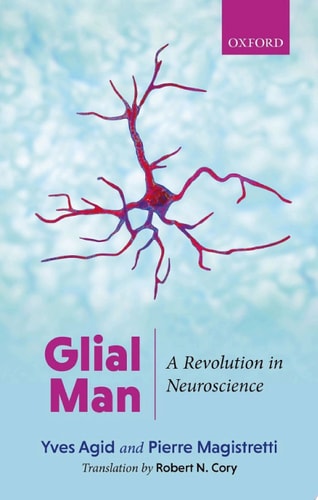
Glial Man: A Revolution in Neuroscience
0
0
As an Amazon Associate and affiliate partner, Menrva Books earns from qualifying purchases. Learn more
Author Description
Glial cells play an essential role in initiating and controlling our behaviours, playing a major role in communication between brain cells. They share certain properties with neurons, including the ability to use information from the environment to formulate behaviors. Understanding these cells is key to explaining human movement, emotion, and thoughts. Moreover, glial cells provide a panoply of new therapeutic targets for the treatment of neuropsychiatric disorders. This book is the 'brain' child of two scientist physicians: Pierre Magistretti, a leading expert in cerebral metabolism and glial cell biology, and Yves Agid, an expert in the treatment of nervous system diseases and a researcher in the field of neurodegenerative diseases. This book provides many examples of the decisive role glial cells play in the functioning of the human brain, as well as in neurological and psychiatric pathologies. The result is a revolution in our understanding of the brain and a beacon of hope in the treatment of neuropsychiatric disorders.
Menrva's Summary
THE THESIS
This book investigates the critical role of glial cells in brain function, arguing that these cells are central to human behavior, cognition, and the pathology of neuropsychiatric disorders. The authors, Pierre Magistretti and Yves Agid, combine their extensive expertise in cerebral metabolism and clinical neurology to challenge the traditional neuron-centric view of the brain. They present a framework that elevates glial cells from mere support structures to active participants in neural communication and information processing.
THE SCOPE MAP
What You Will Find
- Analysis of glial cell properties and their communication mechanisms with neurons
- Examination of the link between glial function and human movement, emotion, and thought
- Discussion of glial cells as therapeutic targets for neurodegenerative and psychiatric conditions
Scope Limits
- The text does not provide a comprehensive clinical manual for patient treatment
- It does not cover the entirety of neuroanatomy outside the specific context of glial-neuronal interaction
THE AUTHORITY PERSPECTIVE
Experts recognize this work as a significant synthesis of cellular biology and clinical application, bridging the gap between laboratory research and patient care. Readers frequently note the accessibility of the prose despite the technical complexity of the subject matter.
Page Count:
157
Publication Date:
2020-01-01
Publisher:
OUP Oxford
ISBN-10:
0192587013
ISBN-13:
9780192587015
Science
Neurology
Psychiatry
Neuroscience
Biology
Medicine
Community Tags
Similar Books