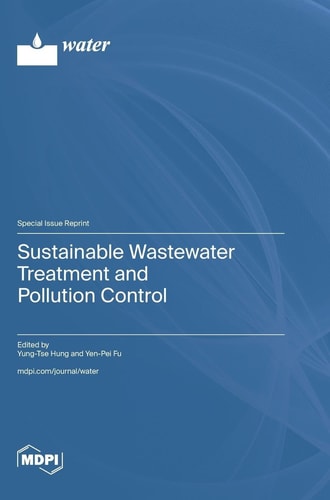
Sustainable Wastewater Treatment and Pollution Control
0
0
As an Amazon Associate and affiliate partner, Menrva Books earns from qualifying purchases. Learn more
Author Description
Wastewater treatment has evolved over the past thirty years, shifting from merely designing systems for discharging into natural water bodies, such as activated sludge and trickling filters, to addressing broader human health concerns such as recycling wastewater, tackling poor waste treatment, and implementing pollution prevention. This reprint, encompassing 13 papers, delves into challenges and innovations in wastewater treatment, sustainability, and contamination management. Research highlights include E. coli dynamics in septic tank storage and fecal coliform concerns in effluent-dominated streams, emphasizing public health. Source-separation sanitation concepts offer ecological and economic benefits. Studies reveal microbial community shifts due to aeration and tetracycline, while CO2 emissions from rainwater and reclaimed water use are examined for carbon-conscious planning. Flocculation advances enhance pollutant removal efficiency, and unconventional technologies target pharmaceuticals such as lidocaine. Innovations extend to biosorbents such as fungal biomass for dye removal, TiO2-modified filters, and high-rate anaerobic processes for agro-food wastewater. The synthesis underscores the need for sustainable, tailored wastewater strategies amid rising contamination, addressing economic and efficiency challenges. Each paper prioritizes advancing water quality and reducing environmental impact while ensuring practical applications through interdisciplinary methods.
Menrva's Summary
THE THESIS
This collection investigates the evolving landscape of wastewater treatment, moving beyond traditional discharge methods to encompass public health, resource recycling, and pollution prevention. The 13 papers within this reprint address critical challenges and innovations in wastewater management, focusing on sustainability and contamination control. Research spans from microbial dynamics in septic systems and effluent streams to the ecological and economic advantages of source-separation sanitation. The studies also explore the impact of aeration and antibiotics on microbial communities, analyze carbon emissions from water reuse, and detail advancements in pollutant removal technologies.
THE SCOPE MAP
- Analysis of E. coli dynamics in septic tank storage and fecal coliforms in effluent-dominated streams.
- Exploration of source-separation sanitation concepts for ecological and economic benefits.
- Examination of microbial community shifts induced by aeration and tetracycline.
- Assessment of CO2 emissions related to rainwater and reclaimed water utilization for carbon-conscious planning.
- Advancements in flocculation techniques for enhanced pollutant removal efficiency.
- Investigation of unconventional technologies for targeting pharmaceuticals, such as lidocaine.
- Application of biosorbents, including fungal biomass, for dye removal.
- Development and application of TiO2-modified filters and high-rate anaerobic processes for agro-food wastewater.
THE AUTHORITY PERSPECTIVE
The collection synthesizes current research in wastewater treatment, highlighting the necessity for sustainable and tailored strategies in the face of increasing contamination. It addresses practical challenges related to economics and efficiency, emphasizing interdisciplinary approaches to improve water quality and minimize environmental impact. The papers collectively underscore a commitment to advancing water quality and reducing environmental impact through practical, innovative solutions. The research presented aims to provide actionable insights for professionals and researchers in the field.
Page Count:
242
Publication Date:
2025-04-02
Publisher:
Mdpi AG
ISBN-10:
372583427X
ISBN-13:
9783725834273
Non-Fiction
Science
Chemical Engineering
Public Health
Pollution Control
Sustainability
Water Treatment
Microbiology
Community Tags
Similar Books