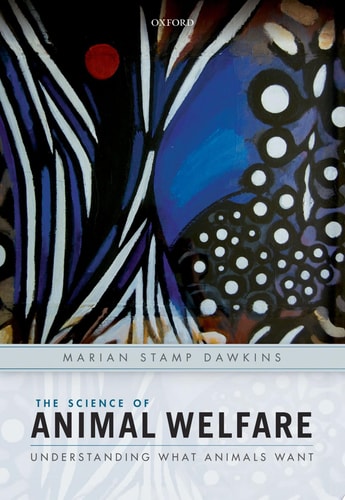
The Science of Animal Welfare: Understanding What Animals Want
0
0
As an Amazon Associate and affiliate partner, Menrva Books earns from qualifying purchases. Learn more
Author Description
What is animal welfare? Why has it proved so difficult to find a definition that everyone can agree on? This concise and accessible guide is for anyone who is interested in animals and who has wondered how we can assess their welfare scientifically. It defines animal welfare as 'health and animals having what they want', a definition that can be easily understood by scientists and non-scientists alike, expresses in simple words what underlies many existing definitions, and shows what evidence we need to collect to improve animal welfare in practice. Above all, it puts the animal's own point of view at the heart of an assessment of its welfare. But, can we really understand what animals want? A consistent theme running through the book is that not only is it possible to establish what animals want, but that this information is vital in helping us to make sense of the long and often confusing list of welfare measures that are now in use such as 'stress' and 'feel good hormones', expressive sounds and gestures, natural behaviour, cognitive bias, and stereotypies. Defining welfare as 'health and what animals want' allows us to distinguish between measures that are simply what an animal does when it is alert, aroused, or active and those measures that genuinely allow us to distinguish between situations the animals themselves see as positive or negative. Sentience (conscious feelings of pleasure, pain, and suffering) is for many people the essence of what is meant by welfare, but studying consciousness is notoriously difficult, particularly in non-human species. These difficulties are discussed in the context of our current - and as yet incomplete - knowledge of human and animal consciousness. Finally, the book highlights some key ideas in the relationship between animal welfare science and animal ethics and shows how closely the well-being of humans is linked to that of other animals. The Science of Animal Welfare is an ideal companion for undergraduate and graduate students.
Menrva's Summary
THE THESIS
This book investigates the core question of how animal welfare can be scientifically defined and measured by prioritizing the animal's own perspective. Marian Stamp Dawkins, a prominent biologist and expert in animal behavior, utilizes her extensive research background to propose a dual-criteria framework: health and the fulfillment of animal desires. She argues that by focusing on what animals want, researchers can move past ambiguous metrics and create a more objective, practical standard for assessing animal well-being.
THE SCOPE MAP
What You Will Find
- A definition of animal welfare based on health and animal preference
- Analysis of common welfare metrics like stress hormones, cognitive bias, and stereotypies
- Discussion on the challenges of studying non-human sentience and consciousness
- Examination of the intersection between animal welfare science and human ethics
Scope Limits
- The text does not provide an exhaustive manual for every specific species' husbandry requirements
- It does not offer a definitive, final solution to the philosophical problem of consciousness
THE AUTHORITY PERSPECTIVE
Experts and academics frequently cite this work as a foundational text for understanding the shift toward preference-based welfare assessment. Readers often note the clarity of the prose, which manages to bridge the gap between complex biological research and accessible public discourse.
Page Count:
160
Publication Date:
2021-01-01
Publisher:
OUP Oxford
ISBN-10:
0192588761
ISBN-13:
9780192588760
Science
Animal Welfare
Evolution
Ethics
Biology
Zoology
Community Tags
Similar Books