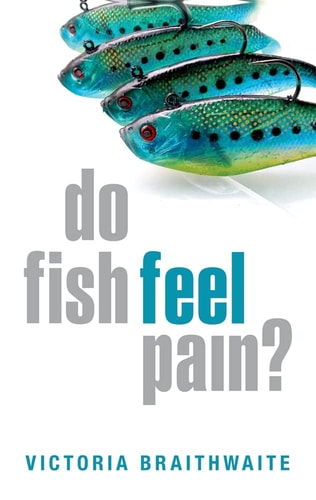
Do Fish Feel Pain?
0
0
As an Amazon Associate and affiliate partner, Menrva Books earns from qualifying purchases. Learn more
Author Description
Each year millions of fish are caught on barbed hooks or left to die by suffocation on the decks of fishing boats. But while there has been increasing interest in recent years in the welfare of mammals, fish are thought to be too different--too dim-witted, too cold-blooded, too simple--to merit our concern.Here, biologist Victoria Braithwaite explores the question of fish pain and fish suffering, explaining what science can now tell us about fish behavior, and examining the related ethical questions about how we should treat these animals. Fish have in the past been portrayed as slow, cold automata with a very simple brain that generates stereotyped behavior. But Braithwaite presents new scientific evidence that seriously challenges this view. Indeed, there is a growing body of science demonstrating that fish are far smarter and more cognitively competent than we have previously suspected. Several fish species are surprisingly intelligent and research has shown that they can have both accurate and long lasting memories, which in some cases, such as migrating salmon, can span years. Moreover, the author demonstrates that fish have more in common with other vertebrates than we think. Their overall physiology, for instance, shares many similarities with other vertebrates--even ourselves. The way that they respond to stressful situations, the so-called "stress response," is strikingly similar. After experiencing a stressful event, our bodies release cortisol into the blood, and the same is true in fish.Victoria Braithwaite is one of the key scientists working on fish pain and she is also actively involved with both the fishing industry and the angling world, helping them sort through the implications of these findings. Though far from anti-fishing, she concludes that scientific evidence suggests that we should widen to fish the protection currently given to birds and animals.
Menrva's Summary
THE THESIS
This book investigates the biological and ethical question of whether fish possess the capacity to experience pain and suffering. Biologist Victoria Braithwaite draws upon her extensive research in animal cognition and physiology to challenge the long-standing assumption that fish are simple, unfeeling automata. By comparing the neurological and stress-response systems of fish to those of other vertebrates, she presents a compelling argument for reevaluating our moral obligations toward aquatic life.
THE SCOPE MAP
What You Will Find
- Comparative analysis of vertebrate physiology and stress responses
- Evidence regarding fish cognitive competence and long-term memory
- Examination of ethical frameworks concerning animal welfare in the fishing industry
- Synthesis of current scientific research on nociception and pain perception in aquatic species
THE AUTHORITY PERSPECTIVE
Experts recognize this work as a foundational text that bridges the gap between marine biology and animal ethics. Readers frequently note the accessible yet rigorous nature of the prose, which effectively translates complex physiological data for a general audience.
Page Count:
194
Publication Date:
2010-04-19
Publisher:
Oxford University Press
ISBN-10:
0199551200
ISBN-13:
9780199551200
Nature
Science
Animal Welfare
Biology
Activities & Sports
Fishes
Ethics
Fishing
Community Tags
Other Editions(2)
Similar Books













Reader Comments
Share Your Thoughts
No comments yet. Be the first to share your thoughts!