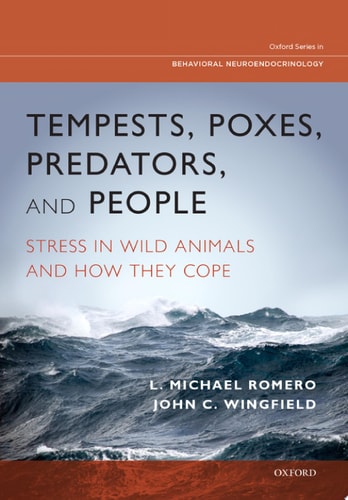
Tempests, Poxes, Predators, and People: Stress in Wild Animals and How They Cope
0
0
As an Amazon Associate and affiliate partner, Menrva Books earns from qualifying purchases. Learn more
Author Description
Although scientists have discovered many fundamental physiological and behavioral mechanisms that comprise the stress response, most of current knowledge is based on laboratory experiments using domesticated or captive animals. Scientists are only beginning, however, to understand how stress impacts wild animals - by studying the nature of the stressful stimuli that animals in their natural environments have adapted to for survival, and what the mechanisms that allow that survival might be. This book summarizes, for the first time, several decades of work on understanding stress in natural contexts. The aim is two-fold. The first goal of this work is to place modern stress research into an evolutionary context. The stress response clearly did not evolve to cause disease, so that studying how animals use the stress response to survive in the wild should provide insight into why mechanisms evolved the way that they did. The second goal is to provide predictions on how wild animals might cope with the Anthropocene, the current period of Earth's history characterized by the massive human remodeling of habitats on a global scale. Conservation of species will rely upon how wild animals use their stress response to successfully cope with human-created stressors.
Menrva's Summary
THE THESIS
This book investigates how wild animals utilize physiological and behavioral stress responses to survive in natural environments and how these mechanisms might facilitate or hinder adaptation to human-induced habitat changes. John C. Wingfield and L. Michael Romero, both established experts in behavioral neuroendocrinology, synthesize decades of field research to bridge the gap between laboratory-based stress models and the realities of life in the wild. They argue that the stress response is an evolved survival tool rather than a pathology, providing a framework for understanding species resilience in the Anthropocene.
THE SCOPE MAP
What You Will Find
- Evolutionary analysis of the stress response in non-domesticated species
- Comparative data between laboratory findings and field observations
- Predictive models for species survival amidst global human-driven habitat remodeling
- Examination of environmental stressors including predation, disease, and climate volatility
THE AUTHORITY PERSPECTIVE
Experts recognize this work as a foundational text for integrating neuroendocrinology with conservation biology. Researchers frequently cite the book for its clear articulation of how evolutionary history informs current wildlife responses to human-altered landscapes.
Page Count:
624
Publication Date:
2015-11-17
Publisher:
Oxford University Press
ISBN-10:
0195366697
ISBN-13:
9780195366693
Science
Ecology
Medical
Evolutionary Biology
Animal Welfare
Allied Health
Zoology
Biology
Stress Physiology
Neuroscience
Community Tags
Similar Books