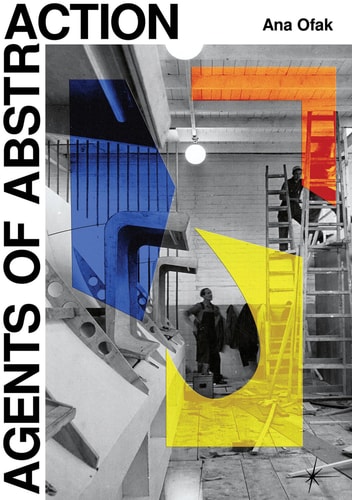
Agents of Abstraction
0
0
As an Amazon Associate and affiliate partner, Menrva Books earns from qualifying purchases. Learn more
Author Description
The aesthetics of a non-Soviet form of socialism, drafted by four Yugoslav artists in the 1950s. As the cold war gained momentum in Europe, Tito's break with Stalin led to Yugoslavia's expulsion from the Eastern bloc in 1948. Confronted with this new reality, the Yugoslav government decided to bridge the indeterminacy of its cultural politics through a creative strategy: it commissioned young artists and architects to draft the aesthetics of a non-Soviet form of socialism. Agents of Abstraction frames the liaison of socialist cultural politics and modernist artistic practice by interlinking ideas of decentralization, experiments in state-funded arts and architecture, nonrepresentational forms, and self-reliance. The cultural and geopolitical contexts are accompanied by rare visual material, much of which appears in print for the first time.
Menrva's Summary
THE THESIS
This book investigates the visual and ideological underpinnings of a non-Soviet socialist aesthetic developed in Yugoslavia during the 1950s. Following Tito's split from the Eastern bloc, the Yugoslav government sought to define its cultural identity by commissioning young artists and architects. The work explores the intersection of socialist cultural policy and modernist art, focusing on concepts like decentralization, state-funded arts, nonrepresentational forms, and self-reliance.
THE SCOPE MAP
- Exploration of the aesthetics of a non-Soviet form of socialism.
- Focus on the period following Yugoslavia's break with Stalin in 1948.
- Analysis of the cultural and geopolitical context of the Cold War in Europe.
- Interlinking of ideas of decentralization, state-funded arts, and architecture.
- Examination of nonrepresentational artistic forms and the concept of self-reliance.
- Inclusion of rare visual material, much of which is published for the first time.
- Contributions from four Yugoslav artists and architects.
THE AUTHORITY PERSPECTIVE
The book frames the liaison of socialist cultural politics and modernist artistic practice, offering a unique perspective on a specific historical and cultural moment. Its focus on decentralization, state-funded arts, and nonrepresentational forms provides a detailed look at how Yugoslavia navigated its post-Stalinist identity. The inclusion of previously unpublished visual material is a significant contribution to the study of art history and political aesthetics. This work is likely to appeal to scholars and enthusiasts of 20th-century European history, art, and political theory.
Page Count:
400
Publication Date:
2019-11-26
Publisher:
MIT Press
ISBN-10:
3956794575
ISBN-13:
9783956794575
Art
History
Architecture
Non-Fiction
Cold War
Yugoslavia
Modernism
Art History
Socialism
Community Tags
Similar Books














