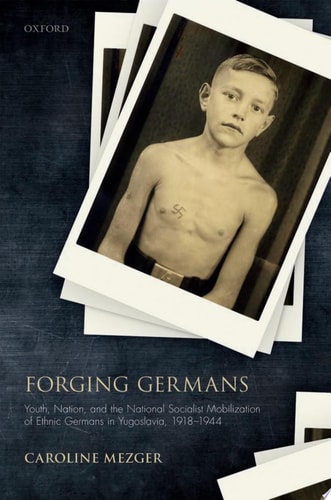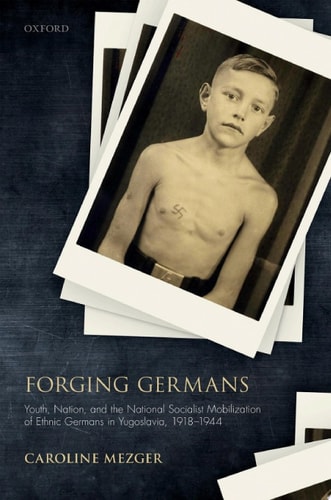
Forging Germans: Youth, Nation, and the National Socialist Mobilization of Ethnic Germans in Yugoslavia, 1918-1944
0
0
As an Amazon Associate and affiliate partner, Menrva Books earns from qualifying purchases. Learn more
Author Description
Forging Germans explores the German nationalization and eventual National Socialist radicalization of ethnic Germans in the Batschka and the Western Banat, two multiethnic, post-Habsburg borderland territories currently in northern Serbia. Deploying a comparative approach, Caroline Mezger investigates the experiences of ethnic German children and youth in interwar Yugoslavia and under Hungarian and German occupation during World War II, as local and Third Reich cultural, religious, political, and military organizations wrestled over young people's national (self-) identification and loyalty. Ethnic German children and youth targeted by these nationalization endeavors moved beyond being the objects of nationalist activism to become agents of nationalization themselves, as they actively negotiated, redefined, proselytized, lived, and died for the "Germanness" ascribed to them. Interweaving original oral history interviews, untapped archival materials from Germany, Hungary, and Serbia, and diverse historical press sources, Forging Germans provides incisive insight into the experiences and memories of one of Europe's most contested wartime demographics, probing the relationship between larger historical circumstances and individual agency and subjectivity.
Menrva's Summary
THE THESIS
This work investigates how ethnic German youth in interwar and wartime Yugoslavia were transformed into agents of National Socialist ideology through competing nationalization efforts. Caroline Mezger, a historian specializing in the social history of the Third Reich and its borderlands, utilizes a comparative framework to analyze the intersection of state-level political agendas and the lived experiences of children. By examining the Batschka and Western Banat regions, the author argues that these youth were not merely passive recipients of propaganda but active participants in the construction and performance of their own national identity.
THE SCOPE MAP
What You Will Find
- Analysis of the Batschka and Western Banat regions between 1918 and 1944.
- Examination of cultural, religious, and military organizations targeting youth.
- Integration of original oral history interviews and multi-national archival research.
Scope Limits
- The study focuses specifically on ethnic Germans in northern Serbia rather than the entirety of the Yugoslavian ethnic German population.
- The analysis prioritizes the youth experience over high-level diplomatic or military strategy.
THE AUTHORITY PERSPECTIVE
Scholars recognize this text as a significant contribution to the study of borderland identities and the social mobilization of youth under occupation. Readers frequently note the rigorous use of primary source materials and the nuanced approach to individual agency within a totalitarian context.
Page Count:
359
Publication Date:
2020-01-01
Publisher:
OUP Oxford
ISBN-10:
0192590472
ISBN-13:
9780192590473
History
World War
Nationalism
European History
Social History
Yugoslavia
German history
Community Tags
Similar Books