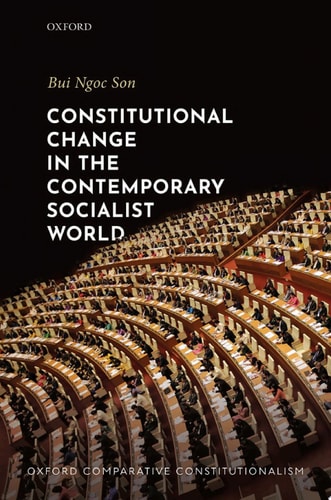
Constitutional Change in the Contemporary Socialist World
0
0
As an Amazon Associate and affiliate partner, Menrva Books earns from qualifying purchases. Learn more
Author Description
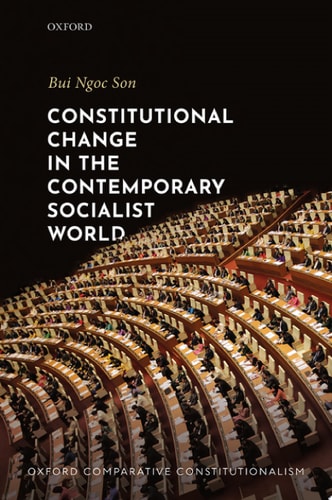
After the collapse of the Soviet bloc, there are only five socialist or communist countries left in the world – China, Cuba, Laos, North Korea, and Vietnam – which constitute about one-quarter of the world’s population. Yet, there is little scholarship on their constitutions. These countries have seen varying socioeconomic changes in the decades since 1991, which have led in turn to constitutional changes. This book will investigate, from a comparative and interdisciplinary perspective, how and why the constitutional systems in these five countries have changed in the last three decades. The book then breaks the constitutional changes down into four questions: what are the substantive contents of constitutional change, what are the functions, what are the mechanisms, and what are the driving forces? These questions form a framework to process the changes the five countries have gone through, such as making new constitutions, amending current ones, introducing more rights, allowing citizens to engage in changes, enacting legislation, and defining the constitutional authority of the three state branches and their relationship with the Communist Party. While all five countries have adapted their constitutional systems, the degree, mechanisms, and influential factors are not identical and present considerable variations. This book examines and explores these differences and how they developed. Constitutional Change in the Contemporary Socialist World offers a comprehensive and holistic view of an understudied and overlooked area of constitutional law, essential for anyone studying or working in law, politics, or policy.
Menrva's Summary
THE THESIS
This book investigates how and why the constitutional systems of the five remaining socialist states—China, Cuba, Laos, North Korea, and Vietnam—have evolved since 1991. Author Ngoc Son Bui, a scholar of Asian constitutional law, utilizes a comparative and interdisciplinary framework to analyze the substantive contents, functions, mechanisms, and driving forces behind these legal shifts. By examining the relationship between state branches and the Communist Party, the text provides a structured analysis of how these nations have adapted their legal foundations amidst significant socioeconomic change.
THE SCOPE MAP
What You Will Find
- Comparative analysis of constitutional developments in China, Cuba, Laos, North Korea, and Vietnam.
- A four-part analytical framework focusing on content, function, mechanism, and driving forces.
- Examination of legislative enactments, constitutional amendments, and the evolution of citizen rights.
Scope Limits
- The analysis is restricted to the five remaining socialist states and does not cover post-socialist transitions in former Soviet bloc nations.
- The text focuses primarily on constitutional law and state-party dynamics rather than broader sociological or economic histories of these regions.
THE AUTHORITY PERSPECTIVE
Experts identify this work as a significant contribution to the field of comparative constitutionalism due to its focus on an under-researched geographic and political cluster. Readers frequently note the academic density of the prose, which serves as a rigorous resource for scholars and practitioners in law and political science.
Page Count:
376
Publication Date:
2020-01-01
Publisher:
OUP Oxford
ISBN-10:
0192592033
ISBN-13:
9780192592033
Constitutional Law
Government
Law
Comparative Politics
Professional Career & Trade
Socialism
Community Tags
Other Editions(3)
Similar Books



Reader Comments
Share Your Thoughts
No comments yet. Be the first to share your thoughts!