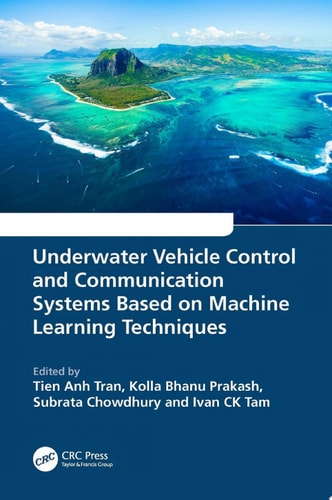
Underwater Vehicle Control and Communication Systems Based on Machine Learning Techniques
0
0
As an Amazon Associate and affiliate partner, Menrva Books earns from qualifying purchases. Learn more
Author Description
The development of intelligent transportation systems, especially autonomous underwater vehicles, has become significant in marine engineering, with an aim to enhance energy efficiency management and communication systems. This book covers different aspects of optimization of autonomous underwater vehicles and their propulsion systems via machine learning techniques. It further analyses hydrodynamic characteristics including the study of experimental investigation combined with hydrodynamic characteristics backed by MATLAB® codes and simulation study results. Features: Covers utilization of machine learning techniques with a focus on marine science and ocean engineering. Details effect of the intelligent transportation system (ITS) into the sustainable environment and ecology system. Evaluates performance of particle swarm intelligence-based optimization techniques. Reviews propulsion performance of the remote-controlled vehicles based on machine learning techniques. Includes MATLAB® examples and simulation study results. This book is aimed at graduate students and researchers in marine engineering and technology, computer science, and control system engineering.
Menrva's Summary
THE THESIS
This book investigates the application of machine learning techniques to enhance the performance and communication capabilities of autonomous underwater vehicles. It addresses the growing significance of intelligent transportation systems in marine engineering, focusing on optimizing energy efficiency and communication protocols. The work analyzes hydrodynamic characteristics through experimental investigations and simulations, providing practical MATLAB® code examples. The author aims to bridge the gap between theoretical machine learning concepts and their real-world application in marine technology.
THE SCOPE MAP
- Utilization of machine learning techniques specifically for marine science and ocean engineering.
- Analysis of the impact of intelligent transportation systems on sustainable environments and ecological systems.
- Evaluation of performance for particle swarm intelligence-based optimization techniques.
- Review of propulsion performance in remote-controlled vehicles using machine learning.
- Inclusion of MATLAB® examples and simulation study results.
- Hydrodynamic characteristics and experimental investigation.
- Optimization of autonomous underwater vehicles and their propulsion systems.
THE AUTHORITY PERSPECTIVE
This book is targeted towards graduate students and researchers in marine engineering, computer science, and control system engineering. The content focuses on practical applications of machine learning in a specialized field, suggesting it will be of interest to those working on autonomous underwater vehicles. The inclusion of MATLAB® examples and simulation results indicates a hands-on approach, likely appealing to engineers and scientists seeking to implement these techniques. The book's scope covers optimization, communication, and hydrodynamic analysis, presenting a comprehensive overview for its intended audience.
Page Count:
174
Publication Date:
2023-12-04
Publisher:
Taylor & Francis
ISBN-10:
1003817025
ISBN-13:
9781003817024
Science & Technology
Non-Fiction
Propulsion systems
MATLAB
Control systems
Computer Science
Machine Learning
Community Tags
Similar Books