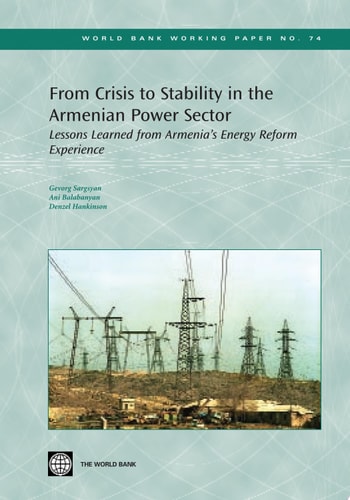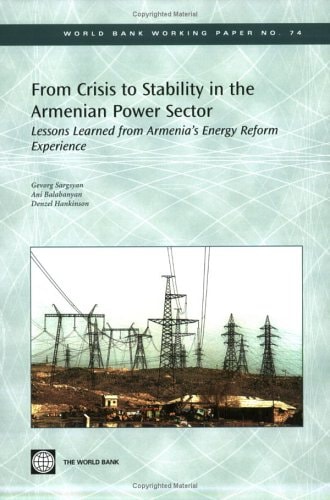
From Crisis to Stability in the Armenian Power Sector: Lessons Learned from Armenia's Energy Reform Experience
0
0
As an Amazon Associate and affiliate partner, Menrva Books earns from qualifying purchases. Learn more
Author Description
The last fifteen years have seen Armenia emerge from Soviet rule and a severe economic and energy crisis, both complicated by its newfound political surroundings. The last ten years have seen significant reform and progress in the power sector which, when compared to the progress made by its neighbors, is all the more remarkable. The benefits of reform have not been easily won, however, and Armenia?s success is a tribute to its ability to learn from mistakes and persevere. A combination of improper planning and bad fortune forced the Government of Armenia to go through three separate tenders for its privatization assets. A combination of good planning and good fortune ultimately allowed for what has turned out to be one of the region's most successful infrastructure privatizations so far.
Menrva's Summary
THE THESIS
The Armenian power sector has undergone a remarkable transformation from the post-Soviet economic and energy crisis to a position of relative stability and reform. This World Bank working paper details the complex journey of energy reform in Armenia over the last fifteen years, highlighting the challenges and successes of transitioning from Soviet rule. It examines the significant progress made in the power sector, particularly when contrasted with neighboring countries, attributing Armenia's achievements to its capacity for learning from mistakes and its perseverance through difficult privatization processes. The paper analyzes the impact of both improper planning and good fortune on the government's efforts to privatize assets, ultimately leading to one of the region's most successful infrastructure privatizations.
THE SCOPE MAP
- Analysis of Armenia's economic and energy crisis following Soviet rule.
- Detailed examination of power sector reforms implemented over a ten-year period.
- Comparative assessment of Armenia's reform progress against regional neighbors.
- Case study of the challenges and successes in infrastructure privatization.
- Discussion of the role of planning, government tenders, and fortune in privatization outcomes.
- Lessons learned from Armenia's experience in overcoming energy sector challenges.
THE AUTHORITY PERSPECTIVE
This working paper is likely to be of interest to policymakers, economists, and researchers focused on post-Soviet economic transitions and energy sector reform. The detailed account of Armenia's experience provides valuable insights into the complexities of privatization and the factors contributing to successful infrastructure development in challenging environments. The analysis emphasizes the importance of adaptive strategies, learning from setbacks, and the interplay of planning and external circumstances in achieving reform objectives. The paper serves as a practical case study for understanding the path from crisis to stability in a critical economic sector.
Page Count:
102
Publication Date:
2006-03-01
Publisher:
World Bank Publications
ISBN-10:
0821365894
ISBN-13:
9780821365892
Politics
Non-Fiction
Economics
Case Study
Energy policy
Community Tags
Similar Books