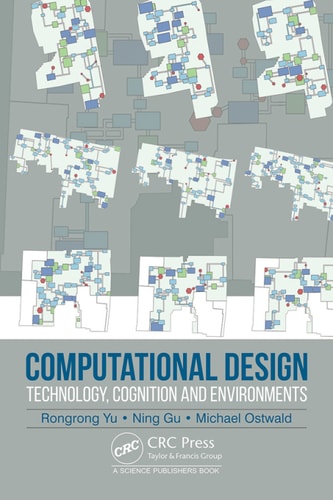
Computational Design
0
0
As an Amazon Associate and affiliate partner, Menrva Books earns from qualifying purchases. Learn more
Author Description
New computational design tools have evolved rapidly and been increasingly applied in the field of design in recent years, complimenting and even replacing the traditional design media and approaches. Design as both the process and product are changing due to the emergence and adoption of these new technologies. Understanding and assessing the impact of these new computational design environments on design and designers is important for advancing design in the contemporary context. Do these new computational environments support or hinder design creativity? How do those tools facilitate designers’ thinking? Such knowledge is also important for the future development of design technologies. Research shows that design is never a mysterious non-understandable process, for example, one general view is that design process shares a common analysis-synthesis-evaluation model, during which designers interact between design problem and solution spaces. Understanding designers’ thinking in different environments is the key to design research, education and practice. This book focuses on emerging computational design environments, whose impact on design and designers have not been comprehensively and systematically studied. It comprises three parts. The history and recent developments of computational design technologies are introduced in Part I. The main categories of technologies cover from computer-aided drafting and modelling tools, to visual programming and scripting tools for algorithmic design, to advanced interfaces and platforms for interactions between designers, between designers and computers, and between the virtual environment and the physical reality. To critically explore design thinking, especially in these new computational design environments, formal approaches to studying design thinking and design cognition are introduced and compared in Part II, drawing on literature and studies from the 70s to the current era. Part III concludes the book by exploring the
Menrva's Summary
THE THESIS
The rapid evolution of computational design tools necessitates a critical examination of their impact on the design process and creative output. This book investigates how emerging computational environments, ranging from CAD and visual programming to advanced interactive platforms, are reshaping design and designers. It addresses key questions regarding whether these tools enhance or impede creativity and how they influence designers' cognitive processes, drawing on research from the 1970s to the present. The work aims to provide a comprehensive and systematic study of these technologies' effects, crucial for advancing design research, education, and practice.
THE SCOPE MAP
- Historical overview and recent developments in computational design technologies.
- Coverage of computer-aided drafting and modeling tools.
- Exploration of visual programming and scripting for algorithmic design.
- Analysis of advanced interfaces and platforms for human-computer and virtual-physical interaction.
- Introduction to formal approaches for studying design thinking and cognition.
- Comparison of design thinking studies from the 1970s to the present era.
- Exploration of the impact of computational design environments on design and designers.
THE AUTHORITY PERSPECTIVE
The book offers a timely and systematic study of computational design's influence, addressing critical questions about its effect on creativity and designer cognition. It synthesizes historical developments with contemporary research on design thinking and technology. The structured approach, divided into historical context, cognitive studies, and impact analysis, promises a comprehensive overview for researchers, educators, and practitioners. The work is positioned to inform the future development of design technologies by understanding how designers interact with these evolving tools.
Page Count:
252
Publication Date:
2021-07-25
Publisher:
Taylor & Francis
ISBN-10:
0429536372
ISBN-13:
9780429536373
Non-Fiction
Architecture
Science & Technology
Computer Science
Design
Technology
Community Tags
Similar Books









Reader Comments
Share Your Thoughts
No comments yet. Be the first to share your thoughts!