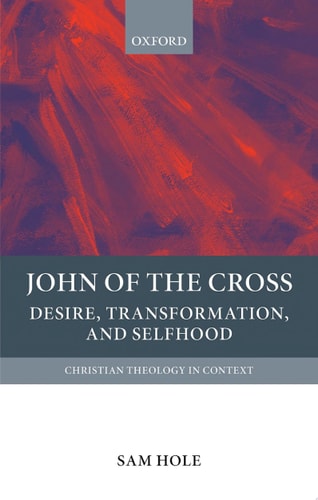
John of the Cross: Desire, Transformation, and Selfhood
0
0
As an Amazon Associate and affiliate partner, Menrva Books earns from qualifying purchases. Learn more
Author Description
Through the 'dark night of the soul' to the depiction of the erotically-charged union of the soul and God, the poetry and prose works of the Spanish friar John of the Cross (1542-1591) offer a striking account of the transformation of the individual in the course of the Christian life. John of the Cross: Desire, Transformation, and Selfhood argues that these writings are animated by John's own creative and subtly conceptualized notion of erotic desire. John's understanding of desire has the potential to enrich recent theological discussion of the subject, but it has been curiously neglected in past scholarship. To correct this lacuna, this study undertakes a detailed historical analysis in three parts. Firstly, it attends to the patristic, medieval, and sixteenth-century Spanish influences on John's writings, showing how John reworks a long tradition of biblical, Christian, and Platonic reflection on the concept. Secondly, it traces the importance of desire through John's writings, demonstrating how he develops the theme through his poetry, his anthropology of the soul, and his account of the spiritual ascent. Thirdly, it explores the reception of his writings in the twentieth century, demonstrating how particular modern philosophical and theological commitments have prevented scholars from recognising the rich and distinctive shape of John's theological vision. John's account of the transformation of the self, with its hopeful vision of the graced transformation of the soul's desires, has significance beyond the constrained modern categories of systematic theology, Christian spirituality, pastoral theology, and mysticism--it is a vision that is worthy of recovery today.
Menrva's Summary
THE THESIS
This study investigates how the concept of erotic desire functions as a central, yet historically overlooked, mechanism for individual transformation within the theological writings of John of the Cross. Sam Hole, a scholar of Christian theology, utilizes a rigorous historical and analytical framework to examine John's sixteenth-century texts. By situating these works within their patristic and medieval contexts, the author argues that John's unique conceptualization of desire offers a distinct vision of the self that challenges modern theological interpretations.
THE SCOPE MAP
What You Will Find
- Historical analysis of patristic, medieval, and sixteenth-century Spanish influences on John's work.
- A thematic examination of desire across John's poetry, anthropology, and spiritual ascent narratives.
- A critical review of twentieth-century reception history and its impact on contemporary scholarship.
Scope Limits
- The study does not provide a general biography of John of the Cross, focusing instead on his theological and conceptual output.
- It does not attempt to reconcile John's work with all modern psychological theories of desire.
THE AUTHORITY PERSPECTIVE
Scholars recognize this text as a significant intervention in the study of Christian mysticism, particularly for its focus on the neglected role of erotic desire in John's theology. Readers frequently note the academic density of the prose, which is intended for those familiar with systematic theology and historical research methods.
Page Count:
233
Publication Date:
2020-01-01
Publisher:
OUP Oxford
ISBN-10:
0192608134
ISBN-13:
9780192608130
Religion
Biography
Spirituality
Philosophy
Christian Theology
History of religion
Mysticism