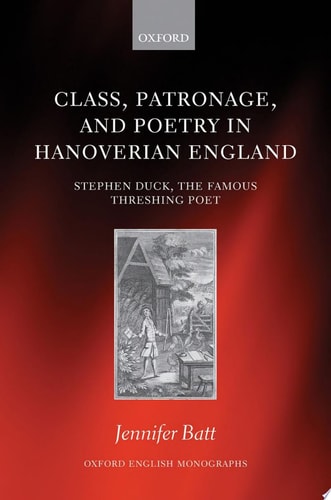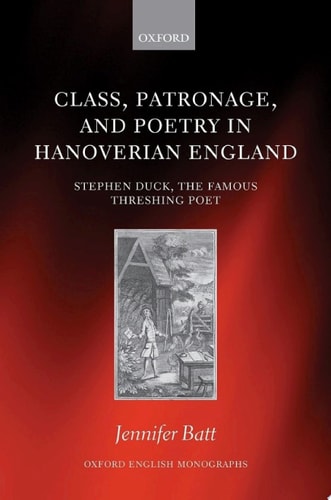
Class, Patronage, and Poetry in Hanoverian England: Stephen Duck, The Famous Threshing Poet
0
0
As an Amazon Associate and affiliate partner, Menrva Books earns from qualifying purchases. Learn more
Author Description
In 1730 Stephen Duck became the most famous agricultural labourer in the Hanoverian England when his writing won him the patronage of Queen Caroline. Duck and his writing intrigued his contemporaries. How was it possible for an agricultural labourer to become a poet? What would a thresher write? Did he really deserve royal patronage, and what would he do with such an honour? How should he be supported? And was he an isolated prodigy, or were there others like him, equally deserving of support? Duck's remarkable story reveals the tolerances, and intolerances, of the Hanoverian social order. Class, Patronage, and Poetry in Hanoverian England: Stephen Duck, The Famous Threshing Poet explores these complex and contested relationships through Duck's life and work. It sheds new light on the poet's early life, revealing how the farm labourer developed an interest in poetry; how he wrote his most famous poem, 'The Thresher's Labour'; how his public identity as the 'famous Threshing Poet' took shape; and how he came to be positioned as a figurehead of labouring-class writing. It explores how the patronage Duck received shaped his writing; how he came to reconceive his relationship with land, labour, and leisure; and how he made use of his newly acquired classical learning to develop new friendships and career opportunities. Finally, it reveals how, after Duck's death, rumours about his suicide came to overshadow the achievements of his life. Both in life, and in death, this book argues, Duck provided both opportunity and provocation for thinking through the complex interplay of class, patronage, and poetry in Hanoverian England.
Menrva's Summary
THE THESIS
This book investigates how the life and career of Stephen Duck, an 18th-century agricultural laborer turned poet, illuminate the rigid social hierarchies and patronage systems of Hanoverian England. Jennifer Batt, a scholar of 18th-century literature, utilizes archival research and close readings of Duck's poetry to analyze the intersection of class mobility and literary production. The work argues that Duck’s rise to prominence under royal favor serves as a case study for the period's attitudes toward laboring-class intellectualism and the limitations of social advancement.
THE SCOPE MAP
What You Will Find
- Analysis of the patronage system under Queen Caroline
- Examination of the poem 'The Thresher's Labour' and its reception
- Historical context regarding laboring-class writing in the 18th century
- Biographical details concerning Duck's early life and eventual suicide
Scope Limits
- Does not provide a comprehensive biography of all contemporary laboring-class poets
- Does not offer a broad survey of Hanoverian political history outside the context of literary patronage
THE AUTHORITY PERSPECTIVE
Scholars recognize this text as a significant contribution to the study of 18th-century social dynamics and the history of the book. Readers frequently note the academic density of the prose and the author's meticulous attention to primary source documentation.
Page Count:
233
Publication Date:
2020-01-01
Publisher:
OUP Oxford
ISBN-10:
0192603450
ISBN-13:
9780192603456
Biography
History
English literature
British History
18th century
Social History
Literary Criticism
Indigenous