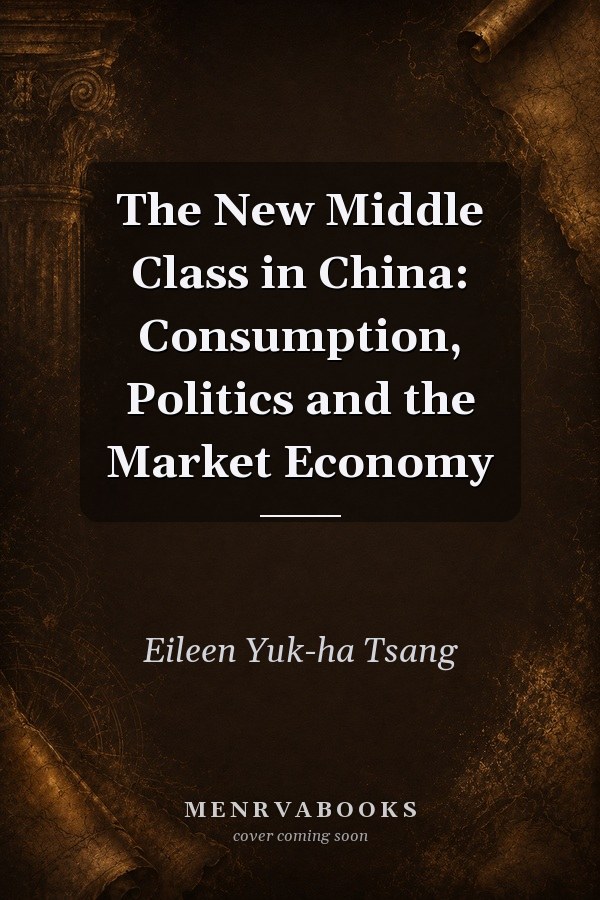
The New Middle Class in China: Consumption, Politics and the Market Economy
0
0
As an Amazon Associate and affiliate partner, Menrva Books earns from qualifying purchases. Learn more
Author Description
This book argues that Western class categories do not directly apply to China and that the new Chinese middle class is distinguished more by socio-cultural rather than by economic factors. Based upon qualitative interviews done in Guangdong in South China, the study looks at entrepreneurs, professionals, and regional party cadres' from various age groups, showing the complex networks among these different groups and the continuing significance of cadres. The study also explores generational differences, exposing how older generations are pragmatic and business-oriented, rather than personally oriented in their consumption whereas the younger generations appear more flexible and hedonistic and tend to be more individualistic, materialistic and oriented towards personal gain. In neither older or younger generations is there much evidence that the new Chinese middle class is taking on a political role in advocating political reform alongside market reforms as is suggested by some Western stratification theorists. Despite being in the vanguard of consumption, they are the laggards in politics.
Menrva's Summary
THE THESIS
This book challenges the direct applicability of Western class categories to China, proposing that socio-cultural factors, rather than purely economic ones, define the new Chinese middle class. The study, based on qualitative interviews in Guangdong, examines entrepreneurs, professionals, and regional party cadres across different age groups. It reveals complex networks and the persistent influence of cadres, while also highlighting generational consumption differences: older generations are pragmatic and business-oriented, whereas younger generations are more individualistic, materialistic, and hedonistic. Crucially, despite their role in consumption, this new middle class shows little inclination towards political reform advocacy, lagging behind market reforms.
THE SCOPE MAP
- Analysis of entrepreneurs, professionals, and regional party cadres in Guangdong, China.
- Exploration of socio-cultural factors distinguishing the Chinese middle class from Western models.
- Examination of generational differences in consumption patterns and personal orientation.
- Investigation into the political engagement (or lack thereof) of the new middle class.
- Discussion of the continuing significance of regional party cadres within social structures.
- Qualitative interview data as the primary research methodology.
- Critique of Western stratification theories regarding the Chinese context.
THE AUTHORITY PERSPECTIVE
The book posits that Western class categories do not neatly map onto the Chinese context, with socio-cultural factors playing a more significant role in defining the new middle class. Based on interviews in Guangdong, it details generational differences in consumption and highlights the continued influence of regional party cadres. The study concludes that while this demographic is at the forefront of consumption, it has not translated into political activism for reform. The research suggests a divergence between market liberalization and political engagement among this emerging social stratum.
Page Count:
225
Publication Date:
2014-01-01
Publisher:
Palgrave Macmillan
ISBN-10:
0230284329
ISBN-13:
9780230284326
Economics
Politics
Non-Fiction
History
Sociology
Social Classes
China Studies
Community Tags
Similar Books