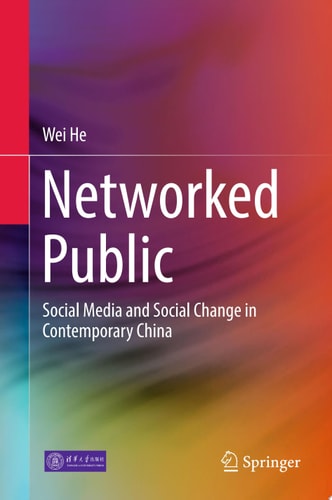
Networked Public
0
0
As an Amazon Associate and affiliate partner, Menrva Books earns from qualifying purchases. Learn more
Author Description
This book coins the term “Networked Public” to describe the active social actors in new media ecology. The author argues that, in today’s network society, Networked Public Communication is different than, yet has similarities with, mass communication and interpersonal communication. As such it is the emergent paradigm for research. The book reviews the historical, technological and social context for the rising of Networked Public, analyzes its constituents and characteristics, and discusses the categories and features of social media in China. By analyzing abundant cases from recent years, the book provides answers to the key questions at micro, meso and macro-levels, including how information flows under regulation in the process of Networked Public Communication; what its features and models are; what collective action strategies and“resistance culture”have been developed as a result of Internet regulate; the nature of power games among Networked Public, mass media, political forces and capital, and the links with the development of Chinese civil society.
Menrva's Summary
THE THESIS
This book introduces the concept of the 'Networked Public' to define active participants within contemporary media ecosystems. The author posits that Networked Public Communication, while sharing traits with mass and interpersonal communication, represents a distinct and emerging paradigm for research in our networked society. It examines the historical, technological, and social factors contributing to the rise of the Networked Public, detailing its components and characteristics, and categorizing social media within the Chinese context. Through extensive case studies, the book addresses critical questions regarding information flow under regulation, the features and models of this communication, and the development of collective action and 'resistance culture' in response to internet regulation.
THE SCOPE MAP
- Definition and characteristics of the 'Networked Public' in new media ecology.
- Comparison and contrast of Networked Public Communication with mass and interpersonal communication.
- Historical, technological, and social context for the emergence of the Networked Public.
- Analysis of social media categories and features specific to China.
- Case studies examining information flow under regulation.
- Exploration of collective action strategies and 'resistance culture' developed online.
- Discussion of power dynamics among the Networked Public, mass media, political forces, and capital.
- The relationship between Networked Public Communication and the development of Chinese civil society.
THE AUTHORITY PERSPECTIVE
The book introduces a novel term, 'Networked Public,' to describe active social actors in today's media landscape, positioning it as an emergent research paradigm. It meticulously analyzes the historical, technological, and social underpinnings of this phenomenon, particularly within the Chinese context, using abundant case studies to illustrate its complexities. The work delves into crucial questions concerning information flow, regulatory impacts, collective action, and the intricate power dynamics at play. It also explores the connection between these networked publics and the evolution of Chinese civil society, offering a comprehensive framework for understanding contemporary communication.
Page Count:
308
Publication Date:
2016-10-18
Publisher:
Springer Nature
ISBN-10:
3662477793
ISBN-13:
9783662477793
Science & Technology
Non-Fiction
Media Studies
Communication Studies
Sociology
Community Tags
Similar Books