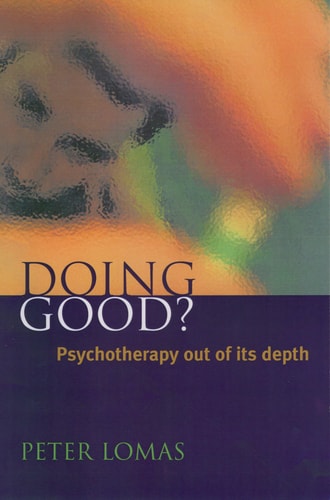
Doing Good?: Psychotherapy out of Its Depth
0
0
As an Amazon Associate and affiliate partner, Menrva Books earns from qualifying purchases. Learn more
Author Description
Over the past decade, psychotherapy and counseling have become more and more popular, with many people turning to therapists in the hope of finding a better, happier, more fulfilling life. In this cogently argued and beautifully written book, Peter Lomas argues that as psychotherapy enters the mainstream, therapists have become dependent on the technical aspects of their profession at the expense of the many moral issues involved. In fact, Lomas believes therapists have grown so afraid of moralizing or of departing from what he views as a spurious scientific neutrality that the dialog between therapist and patient is distorted, potentially confusing, and too remote from the healthy reality of ordinary conversation.In this provocative analysis, Peter Lomas draws on his day-to-day experience of working with patients to explore, among other things, the loss of spontaneity and avoidance of closeness which may hinder rather than help the healing process. He looks at the problems associated with issues of power and its abuse, which is central to psychotherapy, and he studies the dilemmas involved when two people have a clash of moral beliefs.This is a lucid and thought-provoking addition to the literature on psychotherapy and will appeal to both trainee and practicing therapists and counselors, people in therapy, and those considering embarking on it.
Menrva's Summary
THE THESIS
Does the modern professionalization of psychotherapy inadvertently compromise the moral and humanistic foundations necessary for genuine healing? Peter Lomas, an experienced practitioner, argues that the field has become overly reliant on technical methodologies and a facade of scientific neutrality. He contends that this shift creates a sterile environment that distances therapists from the authentic, moral, and spontaneous nature of human interaction, ultimately hindering the therapeutic process.
THE SCOPE MAP
What You Will Find
- Analysis of the power dynamics inherent in the therapist-patient relationship
- Examination of the conflict between professional neutrality and personal moral beliefs
- Critique of technical dependence in clinical practice
Scope Limits
- The text does not provide a comprehensive clinical manual or specific diagnostic protocols
- It does not offer a quantitative study of therapeutic outcomes
THE AUTHORITY PERSPECTIVE
Practitioners and students of psychology frequently cite this work for its challenge to the clinical status quo and its emphasis on the human element of therapy. Experts highlight the text as a significant contribution to the ethical discourse within the mental health profession.
Page Count:
152
Publication Date:
2000-05-11
Publisher:
Oxford University Press
ISBN-10:
0192628682
ISBN-13:
9780192628688
Psychology
Psychotherapy
Professional Ethics
Mental Health
Counseling
Community Tags
Similar Books