ICPC-2: International Classification of Primary Care
0
0
As an Amazon Associate and affiliate partner, Menrva Books earns from qualifying purchases. Learn more
Author Description
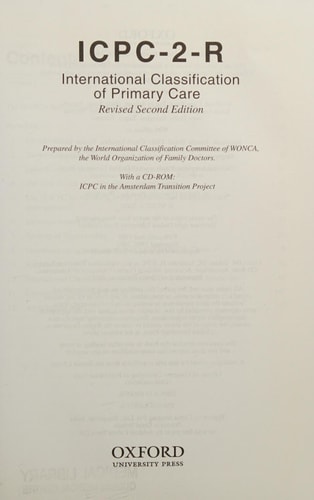
Until the mid 1970s, most morbidity data collected in primary care research was classified using the International Classification of Diseases (ICD). This had the advantage of international recognition, aiding comparability of data from different countires. However, many symptoms and non-diseases conditions that present in primary care were difficult to code with this classification, originally designed for application to mortality statistics and with a disease-based structure. Recognizing the problem, WONCA designed the International Classification of Health Problems in Primary Care (ICHPPC) - however, this was still seen as too closely related to the ICD. A new classification was needed that encompassed both the patient's reason for encounter and the patient's problem. It was also recognized that the building of appropriate primary care systems to allow the assessment and implementation of health care priorities is only possible if the right information is available to health care planners - and this has led to the available to health care planners - and this has led to the development of a new classification system - namely, International Classification of Primary Care (ICPC). ICPC includes reasons for encounter classifications and thus is a patient- oriented rather than disease- or provider-oriented approach. Since the first edition of the International Classification of Primary Care was published, there have been extensive trials, particularly in Europe, and this second edition includes the lessons learnt from this testing, a detailed conversion system for linking the ICPC and ICD-10 codes published by the WHO, additional inclusion criteria, and cross-referencing to rubrics. This new edition has been carefully mapped to the ICD-10 codes and this has led to recognition that the two classifications are complementary rather than competing. Both WONCA and WHO are to jointly sponsor this new edition.
Menrva's Summary
THE THESIS
The ICPC-2 serves as a standardized classification system designed to bridge the gap between primary care encounters and formal disease reporting. Developed by the World Organization of Family Doctors (WONCA), this text addresses the limitations of the International Classification of Diseases (ICD) when applied to the unique, symptom-based nature of primary care. The authors argue that effective health care planning requires a patient-oriented framework that captures both the reason for an encounter and the resulting clinical problem.
THE SCOPE MAP
What You Will Find
- A comprehensive coding system for primary care symptoms and conditions
- Detailed conversion tables linking ICPC codes to ICD-10 standards
- Expanded inclusion criteria and cross-referencing rubrics for clinical documentation
Scope Limits
- The text does not provide clinical diagnostic guidelines or treatment protocols
- It does not cover specialized hospital-based procedural coding outside the primary care context
THE AUTHORITY PERSPECTIVE
Medical professionals and health informatics experts recognize this as a foundational tool for standardizing primary care data collection globally. Readers frequently note the technical density of the coding rubrics, which are intended for use by health planners and clinical researchers rather than general practitioners in daily practice.
Page Count:
200
Publication Date:
1998-08-06
Publisher:
Oxford University Press
ISBN-10:
019262802X
ISBN-13:
9780192628022
Nosology
Health Informatics
Public Health
Primary Care
Community Tags
Similar Books