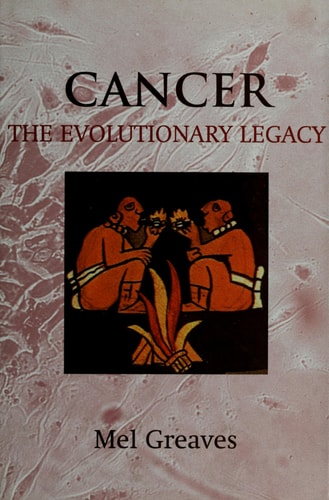
Cancer: The Evolutionary Legacy
0
0
As an Amazon Associate and affiliate partner, Menrva Books earns from qualifying purchases. Learn more
Author Description
Every day, 1500 Americans die of cancer, and yet for most of us this deadly disease remains mysterious. Why is it so common? Why are there so many different causes? Why does treatment so often fail? What, ultimately, is cancer? In this fascinating new book, a leading cancer researcher offers general readers clear and convincing answers to these and many other questions.Mel Greaves places cancer in its evolutionary context, arguing that we can best answer the big questions about cancer by looking through a Darwinian lens. Drawing on both ancient and more modern evolutionary legacies, he shows how human development has changed the rules of evolutionary games, trapping us in a nature-nurture mismatch. Compelling examples, from the King of Naples intestinal tumor in the 15th century, through the epidemic of scrotal skin cancer in 18th-century chimney sweeps, to the current surge of cases of prostate cancer illustrate his thesis. He also shows why the old paradigms of infectious diseases or genetic disorders have proved fruitless when trying to explain this complex and elusive disease. And finally, he looks at the implications for research, prevention, and treatment of cancer that an evolutionary perspective provides.Drawing on the most recent research, this is the first book to put cancer in its evolutionary framework. At a time when Darwinian perspectives on everything from language acquisition to economics are providing new breakthroughs in understanding, medicine seems to have much to gain from the insights provided by evolutionary biology. Written in an exceptionally lucid and entertaining style, this book will be of broad interest to all those who wish to know more about this dread disease.
Menrva's Summary
THE THESIS
This book investigates the fundamental nature of cancer by framing it as an evolutionary consequence of the mismatch between human biological history and modern environmental conditions. Mel Greaves, a prominent cancer researcher, utilizes a Darwinian framework to explain why cancer persists, why it manifests in such diverse forms, and why traditional medical paradigms often struggle to address its complexity. By analyzing the interplay between ancient evolutionary legacies and contemporary lifestyle shifts, the author argues that cancer is an inevitable byproduct of human development and environmental adaptation.
THE SCOPE MAP
What You Will Find
- Historical case studies ranging from 15th-century medical records to 18th-century occupational hazards
- An analysis of the nature-nurture mismatch in human health
- A critique of existing infectious disease and genetic disorder models of cancer
- Implications for future cancer research, prevention strategies, and clinical treatment
Scope Limits
- The text does not provide a comprehensive medical manual for individual patient treatment or clinical diagnosis
- It does not cover the entirety of molecular oncology beyond the scope of evolutionary theory
THE AUTHORITY PERSPECTIVE
Experts and readers alike recognize this work as a significant contribution to the application of evolutionary biology in medical science. The prose is frequently cited for its accessibility to general audiences while maintaining the rigor expected by those familiar with the field.
Page Count:
290
Publication Date:
2000-05-25
Publisher:
Oxford University Press
ISBN-10:
0192628356
ISBN-13:
9780192628350
Health
Science
Biology
Medicine
Oncology
Genetic Aspects
Evolutionary Biology
Community Tags
Similar Books