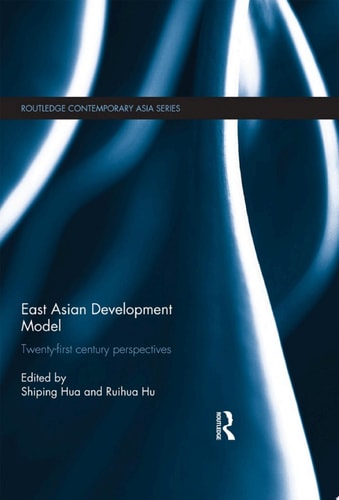
East Asian Development Model
0
0
As an Amazon Associate and affiliate partner, Menrva Books earns from qualifying purchases. Learn more
Author Description
Given the impressive growth in East Asia after World War II, initially led by Japan, the region's development models have been scrutinized since the 1980s. The shared Confucian cultural heritage, strong government guidance, and export led economies were often cited as contributors to the impressive growth. However, major changes have taken place in Asia on and around the turn of the century: Japan experienced two decades of economic slow-down, while World Bank figures reveal that China is poised to become the largest economy in the world in 2014, overtaking the United States. Bearing this in mind, is it even possible to formulate an East Asian development model in the context of a shifting twenty-first century? And if so, what is it? This book addresses this issue by looking at the economic, political and cultural perspectives of China, Japan and South Korea, focusing on dynamism and potential consensus regarding an East Asian development model. The chapters offer a historical background to the East Asian development model, as well as in-depth case studies of each of the countries concerned to show that whilst the East Asian development model does have distinct characteristics as compared with other areas, and other countries may draw some insights from the East Asian experience, it is not a panacea that fits all circumstances and fits all times. This book will be welcomed by students and scholars of Asian economics, Asian politics, international political economy and development studies.
Menrva's Summary
THE THESIS
The East Asian Development Model: A Shifting Paradigm in the 21st Century. This book investigates the evolution and applicability of the East Asian development model in the face of significant regional economic and political changes since the late 20th century. It examines the historical factors, including Confucian heritage, government intervention, and export-oriented economies, that contributed to the region's post-WWII growth, while also analyzing the recent economic slowdowns in Japan and China's rise to global economic prominence. The authors explore whether a unified East Asian development model can still be formulated and what its characteristics might be in the contemporary global landscape.
THE SCOPE MAP
- Historical background of the East Asian development model.
- In-depth case studies of China, Japan, and South Korea.
- Analysis of economic, political, and cultural perspectives.
- Focus on dynamism and potential consensus regarding a development model.
- Examination of the distinct characteristics of the East Asian model compared to others.
- Discussion on the limitations and applicability of the East Asian model as a 'panacea'.
THE AUTHORITY PERSPECTIVE
This book is positioned as a valuable resource for students and scholars in fields such as Asian economics, Asian politics, international political economy, and development studies. The analysis aims to provide insights into the unique aspects of the East Asian development experience, while also cautioning against its universal application. The work addresses the complexities of formulating a singular model in a rapidly changing global economic environment. It offers a nuanced perspective on whether the lessons learned from East Asia can be generalized or if they are context-specific.
Page Count:
282
Publication Date:
2014-12-17
Publisher:
Taylor & Francis
ISBN-10:
1317815777
ISBN-13:
9781317815778
Economics
Non-Fiction
History
Asian Studies
Community Tags
Similar Books