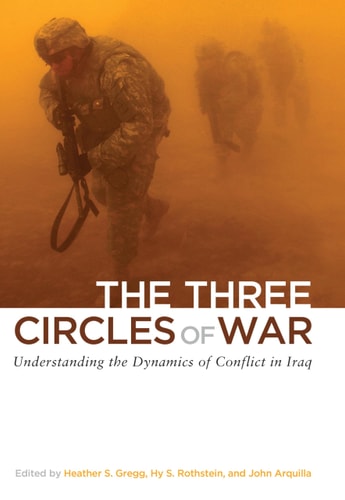
The Three Circles of War: Understanding the Dynamics of Conflict in Iraq
0
0
As an Amazon Associate and affiliate partner, Menrva Books earns from qualifying purchases. Learn more
Author Description
The conflict in Iraq is characterized by three faces of war: interstate conflict, civil war, and insurgency. The Coalition's invasion of Iraq in March 2003 began as an interstate war. No sooner had Saddam Hussein been successfully deposed, however, than U.S.-led forces faced a lethal insurgency. After Sunni al Qaeda in Iraq bombed the Shia al-Askari Shrine in 2006, the burgeoning conflict took on the additional element of civil war with sectarian violence between the Sunni and the Shia. The most effective strategies in a war as complicated as the three-level conflict in Iraq are intertwined and complementary, according to the editors of this volume. For example, the "surge" in U.S. troops in 2007 went beyond an increase in manpower; the mission had changed, giving priority to public security. This new direction also simultaneously addressed the insurgency as well as the civil war by forging new, trusting relationships between Americans and Iraqis and between Sunni and Shia. This book has broad implications for future decisions about war and peace in the twenty-first century.
Menrva's Summary
THE THESIS
This book investigates the complex, multi-layered nature of the conflict in Iraq, analyzing its evolution from an interstate war to a civil war and insurgency. The authors, drawing on their expertise, examine how the Coalition's invasion in 2003 initiated an interstate conflict, which quickly transformed into a lethal insurgency against U.S.-led forces. The subsequent bombing of the al-Askari Shrine in 2006 escalated the conflict into a civil war marked by sectarian violence between Sunni and Shia populations. The book argues that effective strategies for such intricate conflicts require intertwined and complementary approaches, as exemplified by the 2007 troop surge which prioritized public security and fostered trust between Americans and Iraqis, and between Sunni and Shia communities.
THE SCOPE MAP
- Analysis of the conflict in Iraq as a three-level war: interstate, civil, and insurgency.
- Examination of the transition from interstate war to insurgency following the 2003 invasion.
- Detailed account of the escalation into civil war driven by sectarian violence after the 2006 al-Askari Shrine bombing.
- Exploration of the strategic implications of the 2007 U.S. troop surge, focusing on public security and relationship building.
- Discussion of complementary strategies for managing complex, multi-faceted conflicts.
- Implications for future decisions regarding war and peace in the 21st century.
THE AUTHORITY PERSPECTIVE
The book is presented as an analytical examination of the dynamics of the Iraq War, highlighting its multifaceted nature. It posits that effective strategies must be intertwined and complementary, using the 2007 troop surge as a case study for addressing multiple levels of conflict simultaneously. The work aims to offer broad implications for future conflict resolution and peace-building efforts in the 21st century. The framing suggests a focus on strategic analysis and policy implications for understanding contemporary warfare.
Page Count:
259
Publication Date:
2010-01-01
Publisher:
Potomac Books
ISBN-10:
1597975001
ISBN-13:
9781597975001
History
Non-Fiction
Politics
Military History
Community Tags
Similar Books