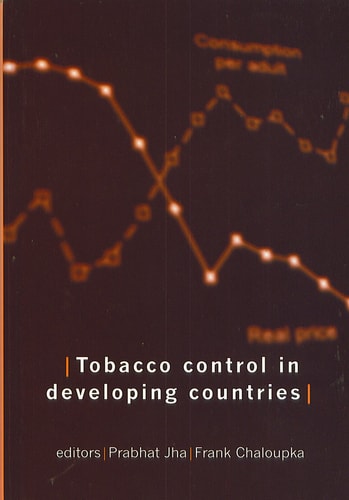
Tobacco Control in Developing Countries
0
0
As an Amazon Associate and affiliate partner, Menrva Books earns from qualifying purchases. Learn more
Author Description
There is no doubt that smoking is damaging global health on an unprecedented scale. However, there is continuing debate on the economics of tobacco control, including the costs and consequences of tobacco control policies. This book aims to fill the analytic gap around this debate This book brings together a set of critical reviews of the current status of knowledge on tobacco control. While the focus is on the needs of low-income and middle- income countries, the analyses are relevant globally. The book examines tobacco use and its consequences including new analyses of welfare issues in tobacco consumption, poverty and tobacco, and the rationale for government involvement. It provides an evidence-based review of policies to reduce demand including taxation, information, and regulation. It critically reviews supply-side issues such as trade and industry and farming issues, including new analyses on smuggling. It also discusses the impact of tobacco control programs on economies, including issues such as employment, tax revenue and welfare losses. It provides new evidence on the effectiveness and cost-effectiveness of control interventions. Finally, it outlines broad areas for national and international action, including future research directions. A statistical annex will contain information on where the reader can find data on tobacco consumption, prices, trade, employment and other items. The book is directed at academic economists and epidemiologists as well as technical staff within governments and international agencies. Students of economics, epidemiology and public policy will find this an excellent comprehensive introduction to economics of tobacco control.
Menrva's Summary
THE THESIS
This book investigates the economic rationale, consequences, and policy effectiveness of tobacco control measures specifically within the context of low- and middle-income nations. Authors Frank J. Chaloupka and Prabhat Jha, both established experts in health economics and epidemiology, synthesize global data to address the debate surrounding tobacco regulation. They provide a rigorous framework for understanding how government intervention, taxation, and supply-side management influence public health outcomes and economic welfare.
THE SCOPE MAP
What You Will Find
- Economic analyses of tobacco consumption, poverty, and welfare loss
- Evidence-based reviews of demand-side policies including taxation and regulation
- Critical examinations of supply-side issues such as smuggling, trade, and farming
- Statistical annexes providing sources for consumption, price, and employment data
Scope Limits
- Does not provide clinical medical advice for smoking cessation
- Focuses primarily on macroeconomic and policy-level interventions rather than individual behavioral psychology
THE AUTHORITY PERSPECTIVE
Experts and academics recognize this work as a foundational text for understanding the intersection of health policy and economic development. Readers frequently note the academic density of the prose, which is tailored specifically for economists, epidemiologists, and government policy advisors.
Page Count:
489
Publication Date:
2000-01-01
Publisher:
Oxford Univ Pr
ISBN-10:
0192632507
ISBN-13:
9780192632500
Economics
Tobacco Manufacture And Trade
Smoking
Public Health
Epidemiology
Public Policy
Community Tags
Similar Books