Jewish Horticultural Schools and Training Centers in Germany and Their Impact on Horticulture and Landscape Architecture in Palestine
0
0
As an Amazon Associate and affiliate partner, Menrva Books earns from qualifying purchases. Learn more
Author Description
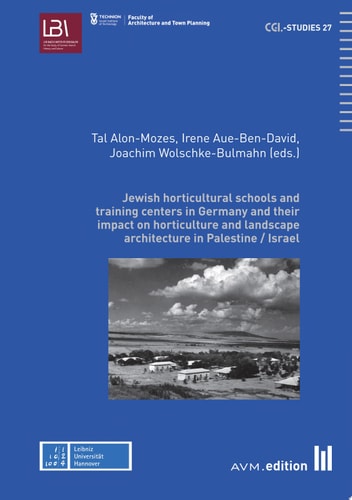
Volume 27 of the CGL-Studies – "Jewish Horticultural Schools and Training Centers in Germany and their Impact on Horticulture and Landscape Architecrture in Palestine / Israel" – presents the results of a symposium which was held in September 2016 at the Leo Baeck Institute Jerusalem, jointly organized by the Leo Baeck Institute, the Faculty of Architecture and Town Planning of the Technion, Haifa, and the Center of Garden Art and Landscape Architecture of Leibniz University Hannover. The volume presents four main chapters. The first, "Hachsharot in Context", deals with the context and changing role of Jewish agricultural training in Germany and Hachsharot in the time of the Nazi dictatorship. In the next chapter, "Perceptions of Nature", ideas of the Jewish youth movement about nature and landscape and the perceptions of nature among Hachshara members are discussed. "Hachsharot in Germany and Palestine", the third chapter, presents papers on Jewish horticultural training centers in Germany in the regions of Hannover and Berlin/Brandenburg, as well as on Gross-Gaglow, a cooperative Jewish settlement located near Cottbus, and on Kfar Ruppin and Sde Eliyahu, a secular and a religious Kibbutz in Israel, respectively. The papers in the concluding chapter "Beyond Hachsharot", deal with the lives and work of female Jewish gardeners and garden architects in Vienna, and with the Ahlem memorial and documentation center, established at the site of the former Israelitische Gartenbauschule Ahlem (Jewish Horticultural School Ahlem) in Hannover.
Menrva's Summary
THE THESIS
This volume investigates the historical development and lasting influence of Jewish horticultural schools and training centers in Germany, particularly their impact on horticulture and landscape architecture in Palestine and Israel. The book presents findings from a 2016 symposium, organized by the Leo Baeck Institute Jerusalem, the Technion's Faculty of Architecture and Town Planning, and Leibniz University Hannover's Center of Garden Art and Landscape Architecture. It is structured into four main chapters that explore the context of these training centers, perceptions of nature among participants, specific examples in Germany and Palestine/Israel, and the broader contributions of female Jewish gardeners and architects.
THE SCOPE MAP
- Analysis of the context and evolving role of Jewish agricultural training in Germany, including Hachsharot during the Nazi dictatorship.
- Exploration of the ideas of the Jewish youth movement regarding nature and landscape, and the specific perceptions of nature among Hachshara members.
- Case studies of Jewish horticultural training centers in Germany (Hannover, Berlin/Brandenburg) and cooperative settlements like Gross-Gaglow.
- Examination of Kfar Ruppin and Sde Eliyahu, a secular and religious Kibbutz in Israel, respectively, in relation to horticultural training.
- Discussions on the lives and work of female Jewish gardeners and garden architects in Vienna.
- Information on the Ahlem memorial and documentation center, located at the site of the former Israelitische Gartenbauschule Ahlem in Hannover.
THE AUTHORITY PERSPECTIVE
The collection of essays, stemming from a 2016 symposium, offers a detailed examination of a specific historical and cultural phenomenon. The structure of the volume, moving from broader context to specific case studies and then to related individual contributions, suggests a comprehensive approach to the subject matter. The focus on the impact of these training centers on landscape architecture in Palestine/Israel indicates a scholarly exploration of historical influence and legacy. The inclusion of female gardeners and architects broadens the scope to encompass diverse contributions within the field.
Page Count:
189
Publication Date:
2020-04-08
Publisher:
Akademische Verlagsgemeinschaft München
ISBN-10:
3960915349
ISBN-13:
9783960915348
History
Non-Fiction
Jewish Studies
Israel
Landscape architecture
Germany
Horticulture
Community Tags
Similar Books