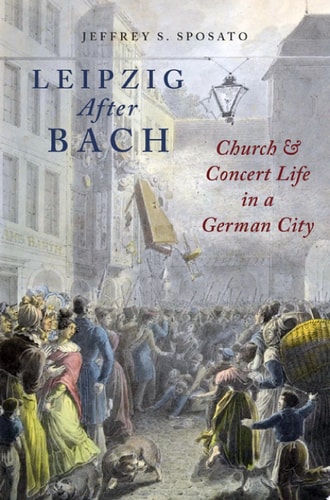
Leipzig After Bach: Church and Concert Life in a German City
0
0
As an Amazon Associate and affiliate partner, Menrva Books earns from qualifying purchases. Learn more
Author Description
Leipzig, Germany, is renowned as the city where Johann Sebastian Bach worked as a church musician until his death in 1750, and where Felix Mendelssohn Bartholdy directed the famed Gewandhaus orchestra until his own death in 1847. But the century in between these events was critically important as well. During this period, Leipzig's church music enterprise was convulsed by repeated external threats-a growing middle class that viewed music as an object of public consumption, religious and political tumult, and the chaos of the Seven Years and Napoleonic wars. Jeffrey S. Sposato's Leipzig After Bach examines how these forces changed church and concert life in Leipzig. Whereas most European cities saw their public concerts grow out of secular institutions such as a royal court or an opera theater, neither of these existed when Leipzig's first subscription concert series, the Grosse Concert, was started in 1743. Instead, the city had a thriving Lutheran church-music enterprise that had been brought to its zenith by Bach. Paid subscription concerts therefore found their roots in Leipzig's church music tradition, with important and unique results. These included a revolving door between the Thomaskantor position and the Gewandhaus directorship, as well as public concerts with a distinctly sacred flavor. Late in the century, as church attendance faltered and demand for subscription concerts rose, the Gewandhaus dominated the musical life of Leipzig, influencing church music programming in turn. Examining liturgical documents, orchestral programs, and dozens of unpublished works of church and concert music, Leipzig After Bach sheds new light on a century that redefined the relationship between sacred and secular musical institutions.
Menrva's Summary
THE THESIS
How did the intersection of a declining Lutheran church-music tradition and the rise of a secular middle class redefine the musical landscape of Leipzig between the deaths of J.S. Bach and Felix Mendelssohn? Jeffrey S. Sposato, a scholar of music history, utilizes a wealth of primary source material to argue that Leipzig’s unique concert culture emerged directly from its ecclesiastical roots. By analyzing the transition from church-centered performance to the dominance of the Gewandhaus, Sposato demonstrates how socio-political pressures and war-time instability forced a synthesis of sacred and secular musical institutions.
THE SCOPE MAP
What You Will Find
- Analysis of the transition from the Thomaskantor-led church music to the Gewandhaus subscription model.
- Examination of the impact of the Seven Years War and Napoleonic Wars on local cultural institutions.
- Investigation of the revolving door between church and secular musical leadership roles.
Scope Limits
- The study focuses specifically on the city of Leipzig rather than broader German musical trends.
- The narrative concludes with the death of Mendelssohn in 1847 and does not extend into the late 19th-century developments.
THE AUTHORITY PERSPECTIVE
Experts recognize this work as a significant contribution to the study of 18th and 19th-century German musical institutions. Readers frequently note the academic density of the prose and the depth of the archival research presented throughout the text.
Page Count:
336
Publication Date:
2018-01-01
Publisher:
Oxford University Press
ISBN-10:
0190616970
ISBN-13:
9780190616977
History
Religion
Cultural History
European History
Music German
Musicology
Criticism history
Humanities
Germany
Concerts
Music History
Church music
Community Tags
Similar Books