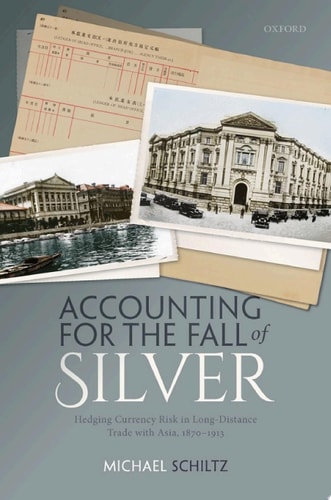
Accounting for the Fall of Silver: Hedging Currency Risk in Long-Distance Trade with Asia, 1870-1913
0
0
As an Amazon Associate and affiliate partner, Menrva Books earns from qualifying purchases. Learn more
Author Description
The second half of the nineteenth century is correctly known to have culminated in the emergence of the gold standard as the first truly international monetary regime. The processes leading up to this remarkable feat are, however, far less documented or understood. Economic historians have only recently started digging into the causes behind the 'fall of silver' that preceded the scramble for gold. It is nowadays clear that its effects were felt worldwide. Not in the least, silver depreciation severely affected East-West trade. It was, among other factors, behind the bankruptcy of several powerful institutions as the Oriental Bank Corporation. Yet at the same time, it cemented the position of other banks, some of which exist until this very day (HSBC, Standard Chartered). What did these banks know that others did not? In Accounting for the Fall of Silver, Michael Schiltz explains that the 1870s and 1880s witnessed furious experiments with new financial products and, equally important, strategies for hedging exchange rate risk. Drawing on archives that have never been used before, the book throws new light on an important episode of nineteenth century world history. At the same time, it illuminates lesser known aspects of the first gold standard period. It draws attention to the existence of 'carry trades' between European money markets and the lesser liquid Asian periphery; and describes the creation of financial contracts with the sole aim of enabling commodity finance among Asian mercantile centers.
Menrva's Summary
THE THESIS
This book investigates how financial institutions managed the volatility of the silver standard during the late nineteenth century to maintain profitability in East-West trade. Michael Schiltz, an economic historian, utilizes previously unexamined archival records to analyze the transition from silver to gold-based monetary regimes. He argues that the survival and success of major banking institutions during this period were contingent upon the development of sophisticated hedging strategies and new financial products designed to mitigate exchange rate risks.
THE SCOPE MAP
What You Will Find
- Analysis of the 'fall of silver' and its impact on global trade between 1870 and 1913.
- Examination of 'carry trades' between European money markets and Asian mercantile centers.
- Documentation of the development of early financial contracts for commodity finance.
- Case studies of banking institutions such as the Oriental Bank Corporation, HSBC, and Standard Chartered.
Scope Limits
- The study focuses primarily on the mechanics of financial hedging rather than the broader political implications of the gold standard.
- The analysis is restricted to the specific period of 1870-1913 and does not extend into the post-World War I monetary environment.
THE AUTHORITY PERSPECTIVE
Scholars in economic history recognize this work as a significant contribution to the understanding of nineteenth-century international finance and the evolution of banking practices. Readers frequently note the technical depth of the research, which provides a granular view of how financial institutions navigated the transition to the gold standard.
Page Count:
214
Publication Date:
2020-01-01
Publisher:
OUP Oxford
ISBN-10:
0192634178
ISBN-13:
9780192634177
19th Century
Finance
Economic History
Economics history
International Trade
Community Tags
Similar Books