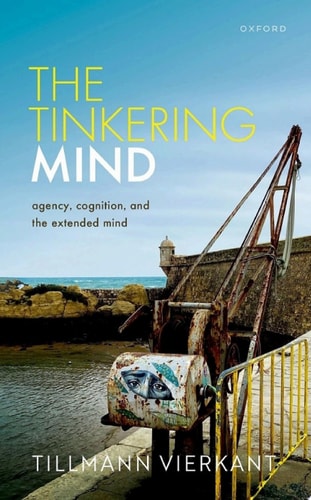
The Tinkering Mind: Agency, Cognition, and the Extended Mind
0
0
As an Amazon Associate and affiliate partner, Menrva Books earns from qualifying purchases. Learn more
Author Description
Epistemic agency is a crucial concept in many different areas of philosophy and the cognitive sciences. It is crucial in dual process theories of cognition as well as theories of metacognition and mindreading, self-control, and moral agency. But what is epistemic agency? The Tinkering Mind argues that epistemic agency has two distinct and incompatible definitions. It can be simply understood as intentional mental action, or as a distinct non-voluntary form of evaluative agency. The core argument of the book demonstrates that both definitions lead to surprising and counterintuitive consequences. If epistemic agency is a form of intentional action, then this implies that the radical theory of extended cognition has to be true. If, on the other hand, epistemic agency is not intentional action but evaluative agency, then intentional epistemic actions like deliberation are not truly cognitive but merely catalytic. Once established, the distinction between these two options sheds new light on various and diverse philosophical and psychological debates from dual process theories to debates on choice and self-control.
Menrva's Summary
THE THESIS
What constitutes epistemic agency, and how do competing definitions of this concept fundamentally alter our understanding of cognition and the extended mind? Tillmann Vierkant, a philosopher specializing in the cognitive sciences, examines the tension between two primary definitions of epistemic agency: intentional mental action and non-voluntary evaluative agency. By analyzing the logical implications of these definitions, the author argues that each path leads to significant, often counterintuitive, consequences for how we categorize human thought and action. The text provides a rigorous framework for evaluating how these definitions intersect with existing theories of mind.
THE SCOPE MAP
What You Will Find
- A comparative analysis of intentional mental action versus evaluative agency.
- An exploration of the radical theory of extended cognition.
- Theoretical applications to dual process theories, metacognition, and self-control.
Scope Limits
- The text does not provide empirical psychological experiments but focuses on conceptual and philosophical analysis.
- It does not cover the full breadth of moral philosophy beyond its intersection with epistemic agency.
THE AUTHORITY PERSPECTIVE
Scholars in philosophy of mind recognize this work as a significant contribution to the debate surrounding the boundaries of the cognitive system. Readers frequently note the academic density of the prose, which is intended for an audience familiar with contemporary analytic philosophy and cognitive science literature.
Page Count:
336
Publication Date:
2022-01-01
Publisher:
OUP Oxford
ISBN-10:
0192646680
ISBN-13:
9780192646682
Philosophy
Psychology
Philosophy of
Epistemology
Mind & Body
Community Tags
Similar Books