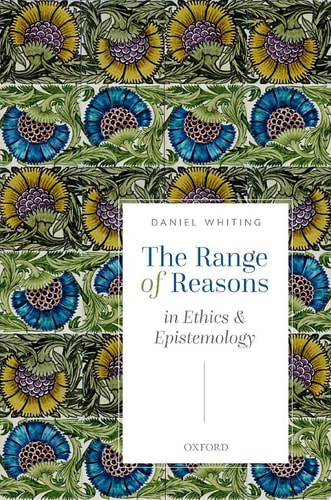
The Range of Reasons: In Ethics and Epistemology
0
0
As an Amazon Associate and affiliate partner, Menrva Books earns from qualifying purchases. Learn more
Author Description
The Range of Reasons contributes to two debates and it does so by bringing them together. The first is a debate in metaethics concerning normative reasons, the considerations that serve to justify a person's actions and attitudes. The second is a debate in epistemology concerning the norms for belief, the standards that govern a person's beliefs and by reference to which they are assessed. The book starts by developing and defending a new theory of reasons for action, that is, of practical reasons. The theory belongs to a family that analyses reasons by appeal to the normative notion of rightness (fittingness, correctness); it is distinctive in making central appeal to modal notions, specifically, that of a nearby possible world. The result is a comprehensive framework that captures what is common to and distinctive of reasons of various kinds: justifying and demanding; for and against; possessed and unpossessed; objective and subjective. The framework is then generalized to reasons for belief, that is, to epistemic reasons, and combined with a substantive, first-order commitment, namely that truth is the sole right-maker for belief. The upshot is an account of the various norms governing belief, including knowledge and rationality, and the relations among them. According to it, the standards to which belief is subject are various, but they are unified by an underlying principle.
Menrva's Summary
THE THESIS
This book investigates the underlying unity between normative reasons for action and epistemic norms for belief. Daniel Whiting, a scholar in contemporary philosophy, constructs a unified framework that bridges metaethics and epistemology. By utilizing modal notions and the concept of rightness, the author argues that practical and epistemic reasons share a common structural foundation, ultimately proposing that truth serves as the primary right-maker for belief.
THE SCOPE MAP
What You Will Find
- A modal-based theory of practical reasons for action
- A unified framework for justifying, demanding, objective, and subjective reasons
- An application of normative theory to epistemic standards
- An analysis of the relationship between knowledge and rationality
Scope Limits
- The text does not provide an exhaustive survey of all competing theories in contemporary metaethics
- The work focuses primarily on the normative structure of reasons rather than empirical psychological studies of belief formation
THE AUTHORITY PERSPECTIVE
Philosophers and students of normative theory recognize this work as a rigorous contribution to the intersection of ethics and epistemology. Readers frequently note the technical density of the prose, which is intended for an audience already familiar with contemporary analytic philosophy.
Page Count:
240
Publication Date:
2021-01-01
Publisher:
OUP Oxford
ISBN-10:
0192646206
ISBN-13:
9780192646200
Philosophy
Metaethics
Epistemology
Ethics
Normative Theory
Community Tags
Similar Books