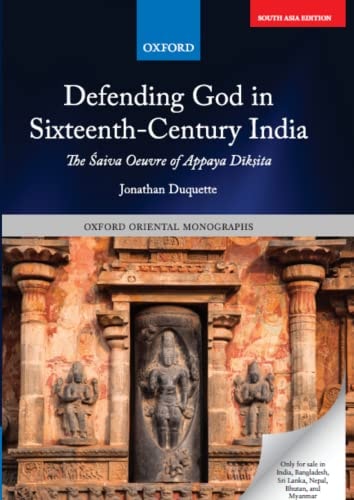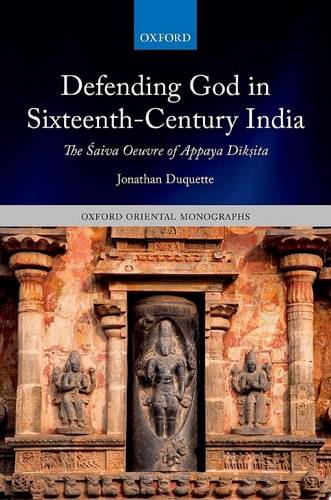
Defending God in Sixteenth-Century India: The Śaiva Oeuvre of Appaya Dīkṣita
0
0
As an Amazon Associate and affiliate partner, Menrva Books earns from qualifying purchases. Learn more
Author Description
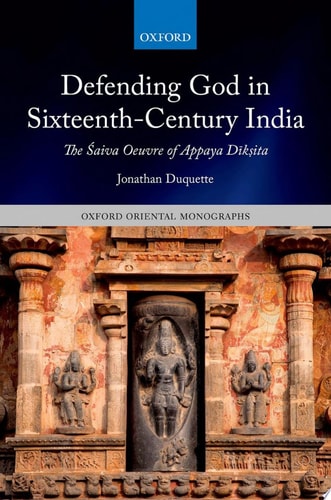
This book is the first in-depth study of the Śaiva oeuvre of the celebrated polymath Appaya Dīkṣita (1520-1593). Jonathan Duquette documents the rise to prominence and scholarly reception of Śivādvaita Vedānta, a Sanskrit-language school of philosophical theology which Appaya single-handedly established, thus securing his reputation as a legendary advocate of Śaiva religion in early modern India. Based to a large extent on hitherto unstudied primary sources in Sanskrit, Duquette offers new insights on Appaya's early polemical works and main source of Śivādvaita exegesis, Śrīkaṇṭha's Brahmamīmāmsābhāṣya; identifies Appaya's key intellectual influences and opponents in his reconstruction of Śrīkaṇṭha's theology; and highlights some of the key arguments and strategies he used to make his ambitious project a success. Centred on his magnum opus of Śivādvaita Vedānta, the Śivārkamanidīpikā, this book demonstrates that Appaya's Śaiva oeuvre was mainly directed against Viśiṣtādvaita Vedānta, the dominant Vaiṣṇava school of philosophical theology in his time and place. A far-reaching study of the challenges of Indian theism, this book opens up new possibilities for our understanding of religious debates and polemics in early modern India as seen through the lenses of one of its most important intellectuals.
Menrva's Summary
THE THESIS
This book investigates the development and scholarly reception of Śivādvaita Vedānta, a school of philosophical theology established by the polymath Appaya Dīkṣita in sixteenth-century India. Jonathan Duquette, a scholar of Indian intellectual history, utilizes previously unstudied Sanskrit primary sources to reconstruct the theological framework of the period. The work argues that Dīkṣita’s primary objective was to position Śivādvaita Vedānta as a robust counter-argument to the prevailing Viśiṣtādvaita Vedānta tradition.
THE SCOPE MAP
What You Will Find
- A comprehensive analysis of Appaya Dīkṣita’s Śaiva oeuvre and his major exegetical work, the Śivārkamanidīpikā.
- Identification of the intellectual influences and sectarian opponents shaping early modern Indian theological discourse.
- Examination of the polemical strategies employed to elevate Śaiva religion within a competitive philosophical landscape.
Scope Limits
- The study focuses specifically on the Śaiva works of Appaya Dīkṣita and does not provide a general biography of the author or an exhaustive history of all Vedānta schools.
THE AUTHORITY PERSPECTIVE
Scholars recognize this text as a significant contribution to the study of early modern Indian intellectual history and sectarian polemics. Readers frequently note the academic density of the prose and the rigorous use of primary Sanskrit sources to clarify previously under-researched theological developments.
Page Count:
290
Publication Date:
2021-01-01
Publisher:
OUP Oxford
ISBN-10:
0192643584
ISBN-13:
9780192643582
Philosophy
Religion
History
Indian philosophy
Asian Studies
Theology