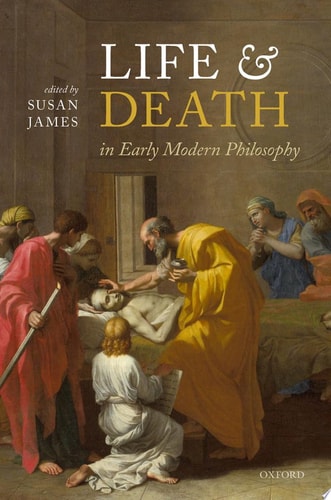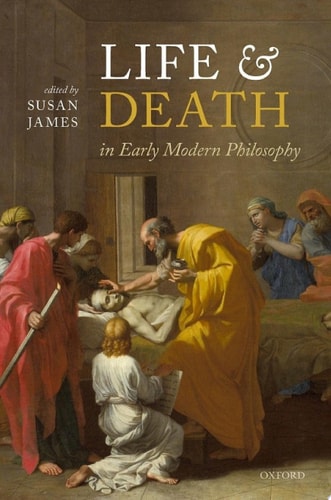
Life and Death in Early Modern Philosophy
0
0
As an Amazon Associate and affiliate partner, Menrva Books earns from qualifying purchases. Learn more
Author Description
This book sets out to convey the breadth of philosophical interest in life and death during the early modern period. It ranges over debates in metaphysics, the life sciences (as we now call them), epistemology, the philosophy of mathematics, philosophical psychology, the philosophy of religion, the philosophy of education, and ethics. At the same time, it aims to illuminate the relationships between the problems explored under these headings. Much of the fascination of early modern discussions of life and death lies in the way apparently disparate commitments merge into strange and unfamiliar outlooks, and challenge some of our most deeply rooted assumptions. In recent years there has been a wave of interest in the place of the life sciences within early modern natural philosophy, and biological questions about life and death form part of the subject matter discussed in these chapters. But Life and Death in Early Modern Philosophy has a further ambition: to link the predominantly theoretical preoccupations associated with the study of organisms to the practical aspect of philosophy. Instead of giving priority to themes that anticipate the preoccupations of modern science, the volume aims to remind us that philosophy, as our early modern predecessors understood it, was also about learning how to live and how to die--this, above all, is why life and death mattered to them.
Menrva's Summary
THE THESIS
This volume investigates how early modern philosophers integrated theoretical inquiries into life and death with the practical necessity of learning how to exist and expire. The text examines the intersection of metaphysics, epistemology, and the life sciences, challenging the modern tendency to separate scientific inquiry from moral philosophy. By analyzing the works of early modern thinkers, the author demonstrates that these disparate fields were once unified under a singular philosophical project.
THE SCOPE MAP
What You Will Find
- Analysis of metaphysical and epistemological debates regarding biological organisms
- Exploration of the relationship between natural philosophy and ethics
- Examination of philosophical psychology, mathematics, and religious thought
Scope Limits
- The text does not provide a comprehensive history of all early modern scientific discoveries
- It does not focus on contemporary biological theories outside of their historical philosophical context
THE AUTHORITY PERSPECTIVE
Scholars recognize this work as a significant contribution to the study of early modern intellectual history. Experts highlight the text for its ability to bridge the gap between theoretical natural philosophy and the practical, lived experience of the period.
Page Count:
360
Publication Date:
2021-01-01
Publisher:
OUP Oxford
ISBN-10:
0192655671
ISBN-13:
9780192655677
Philosophy
Metaphysics
Early Modern
Philosophy history
Ethics
Science History
Community Tags
Similar Books