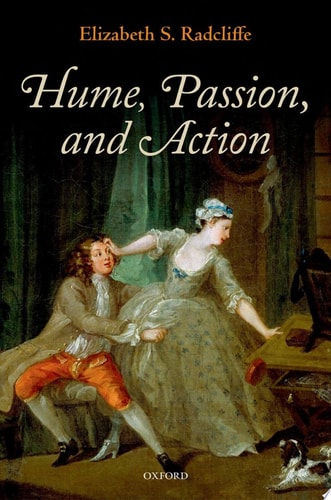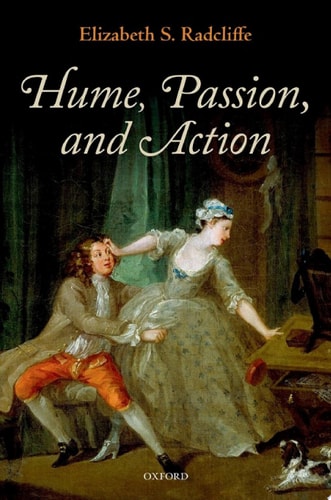
Hume, Passion, and Action
0
0
As an Amazon Associate and affiliate partner, Menrva Books earns from qualifying purchases. Learn more
Author Description
David Hume's theory of action is well known for several provocative theses, including that passion and reason cannot be opposed over the direction of action. Elizabeth S. Radcliffe defends an original interpretation of Hume's views on passion, reason, and motivation which is consistent with other theses in Hume's philosophy, loyal to his texts, and historically situated. She challenges the now orthodox interpretation of Hume on motivation, presenting an alternative that situates Hume closer to "Humeans" than many recent interpreters have. Part of the strategy is to examine the thinking of the early modern intellectuals to whom Hume responds. Most of these thinkers insisted that passions lead us to pursue harmful objects unless regulated by reason; and most regarded passions as representations of good and evil, which can be false. Understanding Hume's response to these claims requires appreciating his respective characterizations of reason and passion. The author argues that Hume's thesis that reason is practically impotent apart from passion is about beliefs generated by reason, rather than about the capacity of reason. Furthermore, the argument makes sense of Hume's sometimes-ridiculed description of passions as "original existences" having no reference to objects. The author also shows how Hume understood morality as intrinsically motivating, while holding that moral beliefs are not themselves motives, and why he thought of passions as self-regulating, contrary to the admonitions of the rationalists.
Menrva's Summary
THE THESIS
This book investigates the core question of how David Hume’s theory of action reconciles the roles of passion and reason in human motivation. Elizabeth S. Radcliffe, a scholar of early modern philosophy, utilizes a rigorous textual analysis of Hume’s primary works alongside the intellectual context of his contemporaries. She argues that Hume’s famous claim regarding the impotence of reason is specifically directed at beliefs generated by reason, rather than a denial of reason's inherent capacity, thereby offering a more nuanced interpretation of his moral psychology.
THE SCOPE MAP
What You Will Find
- A re-evaluation of Hume’s characterization of passions as "original existences."
- Comparative analysis between Hume and early modern rationalist thinkers.
- An examination of the relationship between moral beliefs and intrinsic motivation.
- Historical contextualization of Hume’s response to theories of good and evil.
Scope Limits
- The text does not provide a general introduction to Hume’s entire philosophical system.
- It does not focus on Hume’s political or economic theories.
THE AUTHORITY PERSPECTIVE
Scholars recognize this work as a significant contribution to the ongoing debate regarding Humean motivation and the interpretation of his moral philosophy. Readers frequently note the academic density of the prose, which is intended for an audience familiar with early modern philosophical discourse.
Page Count:
242
Publication Date:
2018-01-01
Publisher:
OUP Oxford
ISBN-10:
0192557688
ISBN-13:
9780192557681
Philosophy
History & Surveys
Epistemology
Early Modern
Ethics
Philosophy history