Author Description
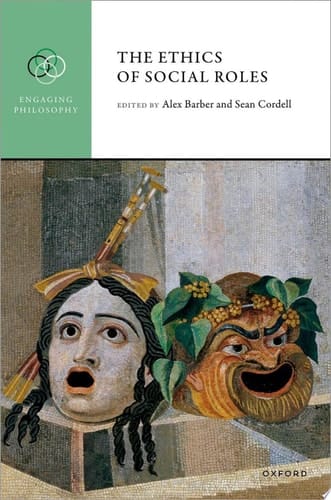
The various social roles we occupy, such as teacher, parent, or friend, shape our ethical lives and colour our perceptions of each other and ourselves. Social roles have long been a central topic in sociology, and specific social roles frequently feature within applied moral philosophy and professional ethics. In striking contrast, the normative significance of social roles per se—the 'ethics of social roles' as a distinct field of philosophical enquiry—has been relatively neglected. Indeed, the view that social roles have genuine ethical bite is often tacitly dismissed as socially regressive, as if the pull of a social role must always be towards 'knowing one's place'. The present collection aims to change this by putting social roles back where they belong: at the centre of normative ethics. After an editors' introduction aimed at readers new to the topic, fourteen original chapters by an international line-up of new and established authors show how the topic of social roles is a kind of missing link between several better-established topics, including collective agency, special obligations, wellbeing, and social and political justice. These contributions are organized into four parts. The first looks at the topic through a historical lens, since philosophers have not always neglected social roles. The second addresses the source of the apparent normative force of social roles. The third examines the relation of a social role's normativity to its wider institutional context. The fourth looks at implications for self and wellbeing.
Menrva's Summary
THE THESIS
This collection investigates the normative significance of social roles, challenging the assumption that they are merely regressive social constructs. Editors Sean Cordell and Alex Barber curate fourteen original chapters that position social roles as a critical, yet overlooked, component of normative ethics. By bridging the gap between collective agency, special obligations, and social justice, the contributors argue that the roles we occupy fundamentally shape our ethical lives and moral responsibilities.
THE SCOPE MAP
What You Will Find
- Historical perspectives on the philosophical treatment of social roles
- Analysis of the sources of normative force within social roles
- Examination of the relationship between institutional contexts and role-based normativity
- Discussions on the impact of social roles on individual self-conception and wellbeing
Scope Limits
- Does not provide a singular, unified theory of social ethics
- Does not focus on specific professional codes of conduct outside of broader philosophical inquiry
THE AUTHORITY PERSPECTIVE
Scholars and students of moral philosophy identify this text as a necessary intervention in the study of normative ethics. Readers frequently note the academic density of the prose, which serves as a foundational resource for those exploring the intersection of sociology and moral theory.
Page Count:
344
Publication Date:
2023-01-01
Publisher:
OUP Oxford
ISBN-10:
0192655582
ISBN-13:
9780192655585
Philosophy
Professional Ethics
Ethics
Social Philosophy
Sociology
Normative Ethics
Community Tags
Similar Books