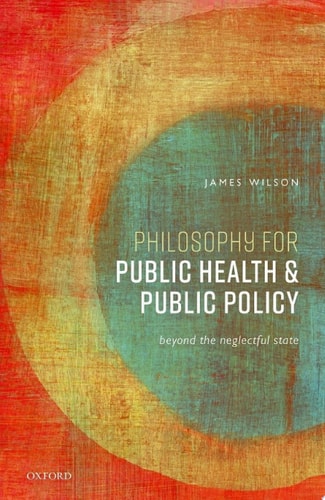
Philosophy for Public Health and Public Policy: Beyond the Neglectful State
0
0
As an Amazon Associate and affiliate partner, Menrva Books earns from qualifying purchases. Learn more
Author Description
Public health has never been more important, or more controversial. What states do, and fail to do, makes a significant difference to the lives we are able to lead. Putting public health first would allow improvements to the health of everyone, especially the worst off. Yet many citizens actively oppose state interference to improve population health, complaining that it encroaches on personal liberty. How should policymakers reconcile these conflicting priorities? This groundbreaking book argues that philosophy is not just useful, but vital, for thinking coherently about priorities in health policy and public policy. Novel, theoretically rigorous, yet practical, Philosophy for Public Health and Public Policy examines why it is so common for public policies to fail in practice to improve the problems they aim to solve, and what to do about this. It argues that a shift to complex systems approaches to policymaking is overdue. Philosophers need to become much more attuned to the contingency and messiness of real world policymaking, and to the ways in which philosophical tools such as thought experiments are frequently unreliable. This book also provides an ethical framework for public health policy. It argues that public health is a right of citizens, alongside more familiar rights such as liberty and security. Public health should not be thought of merely as interference with the rights that individuals have, but as necessary to protect these rights. Chapters explore implications for resource allocation, personal responsibility, health equity, and the control of communicable disease.
Menrva's Summary
THE THESIS
This book investigates how philosophical inquiry can resolve the tension between state-led public health interventions and individual liberty. James Wilson, a scholar in philosophy and public policy, utilizes a combination of ethical theory and systems thinking to address why current policy frameworks often fail to achieve their intended health outcomes. He proposes a shift toward complex systems approaches and argues that public health should be recognized as a fundamental right rather than a mere infringement on personal autonomy.
THE SCOPE MAP
What You Will Find
- An ethical framework for evaluating public health policy.
- Analysis of the limitations of traditional thought experiments in policy design.
- Discussions on resource allocation, health equity, and communicable disease control.
- Arguments for adopting complex systems methodologies in governance.
Scope Limits
- The text does not provide a comprehensive history of global health policy.
- It does not offer a step-by-step manual for implementing specific local health programs.
THE AUTHORITY PERSPECTIVE
Experts recognize this work as a significant contribution to the intersection of political philosophy and practical health administration. Readers frequently note the academic density of the prose, which is intended for policymakers and scholars seeking a rigorous ethical foundation for public health initiatives.
Page Count:
288
Publication Date:
2021-01-01
Publisher:
OUP Oxford
ISBN-10:
0192657860
ISBN-13:
9780192657862
Philosophy
Ethics
Public Health
Social policy
Public Policy
Medical policy
Community Tags
Similar Books