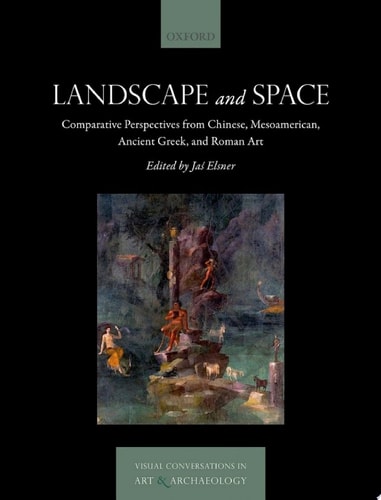
Landscape and Space: Comparative Perspectives from Chinese, Mesoamerican, Ancient Greek, and Roman Art
0
0
As an Amazon Associate and affiliate partner, Menrva Books earns from qualifying purchases. Learn more
Author Description
Landscape has been a key theme in world archaeology and trans-cultural art history over the last half century, particularly in the study of painting in art history and in all questions of human intervention and the placement of monuments in the natural world within archaeology. However, the representation of landscape has been rather less addressed in the scholarship of the archaeologically-accessed visual cultures of the ancient world. The kinds of reliefs, objects, and paintings discussed here have a significant purchase on matters concerned with landscape and space in the visual sphere, but were discovered within archaeological contexts and by means of excavation. Through case studies focused on the invention of wilderness imagery in ancient China, the relation of monuments to landscape in ancient Greece, the place of landscape painting in Mesoamerican Maya art, and the construction of sacred landscape across Eurasia between Stonehenge and the Silk Road via Pompeii, this book emphasises the importance of thinking about models of landscape in ancient art, as well as the value of comparative approaches in underlining core aspects of the topic. Notably, it explores questions of space, both actual and conceptual, including how space is configured through form and representation.
Menrva's Summary
THE THESIS
This volume investigates how ancient civilizations conceptualized and represented landscape and space within their visual cultures, challenging the traditional focus on painting by incorporating archaeological evidence. The authors examine how diverse societies—ranging from ancient China and the Maya to Greece and Rome—integrated natural environments with human-made monuments. By utilizing a comparative framework, the text argues that landscape imagery served as a critical tool for configuring both physical and conceptual space in the ancient world.
THE SCOPE MAP
What You Will Find
- Comparative analysis of landscape representation across Chinese, Mesoamerican, Greek, and Roman cultures
- Examination of the relationship between monuments and their natural settings
- Case studies on the invention of wilderness imagery and the construction of sacred landscapes
- Theoretical discussions on the configuration of space through form and visual representation
Scope Limits
- The text does not provide an exhaustive survey of all ancient landscape traditions
- It focuses specifically on visual cultures accessed through archaeological excavation rather than purely textual or literary sources
THE AUTHORITY PERSPECTIVE
Scholars and students of art history and archaeology frequently cite this work as a significant contribution to the comparative study of ancient visual environments. Experts highlight the text's utility in bridging the gap between traditional art historical analysis and archaeological field findings.
Page Count:
204
Publication Date:
2021-01-01
Publisher:
OUP Oxford
ISBN-10:
0192660977
ISBN-13:
9780192660978
Ancient History
Humanities
Comparative Studies
Art History
Archaeology
Visual Culture
Community Tags
Similar Books