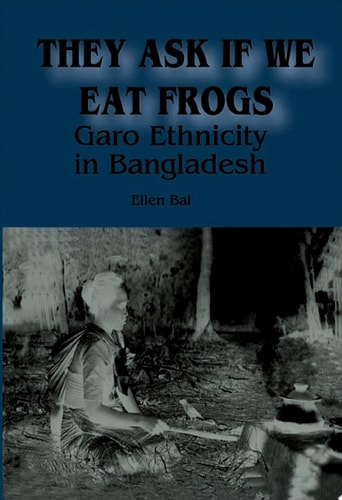
They Ask if We Eat Frogs
0
0
As an Amazon Associate and affiliate partner, Menrva Books earns from qualifying purchases. Learn more
Author Description
This study is a critical investigation into the category of tribes in South Asia. It breaks away from previous studies of tribes in the region. While it focuses on one so-called tribal community, the Garos of Bangladesh, it neither studies Garo culture as such, nor their social organization. Instead it deals with the evolution of Garo identity/ethnicity and with the progressive making of cultural characteristics that support a sense of "e;Garo-ness"e;, in the context of the complex historical developments in this part of South Asia and the world. The importance of this work is not confined to a better understanding of how smaller ethnic groups form, survive or disappear in modern society. It also leads to a more comprehensive insight into how social life in the border region of South and Southeast Asia is organized and how it has transformed over time. This book will be of interest to historians, anthropologists, sociologists, political scientists, students, scholars of South and Southeast Asia and policy-makers.
Menrva's Summary
THE THESIS
This study critically investigates the category of tribes in South Asia, focusing on the evolution of Garo identity in Bangladesh. The book moves beyond traditional studies of tribal culture and social organization to examine how cultural characteristics supporting a sense of "Garo-ness" are progressively constructed. It situates this evolution within the complex historical developments of South and Southeast Asia, offering insights into the formation, survival, and disappearance of smaller ethnic groups in modern society. The work also provides a comprehensive understanding of social organization and transformation in the border region of South and Southeast Asia.
THE SCOPE MAP
- A critical investigation into the category of tribes in South Asia.
- Focus on the Garo community of Bangladesh.
- Analysis of the evolution of Garo identity/ethnicity.
- Examination of the progressive making of cultural characteristics supporting "Garo-ness".
- Contextualization within complex historical developments in South and Southeast Asia.
- Insights into the organization and transformation of social life in the South/Southeast Asian border region.
THE AUTHORITY PERSPECTIVE
This work is positioned as a significant contribution to the understanding of ethnic group formation and identity in South Asia. Its focus on the Garo of Bangladesh and the construction of their cultural identity offers a novel approach compared to previous studies. The book is expected to be of interest to a diverse academic audience, including historians, anthropologists, sociologists, political scientists, and scholars specializing in South and Southeast Asian studies. Policymakers are also identified as a key readership, suggesting the work's relevance to contemporary social and political issues.
Page Count:
290
Publication Date:
2003-08-01
Publisher:
Flipside Digital Content Company Inc.
ISBN-10:
9814515701
ISBN-13:
9789814515702
Non-Fiction
History
Politics
Sociology
Anthropology
Ethnicity
Community Tags
Similar Books














