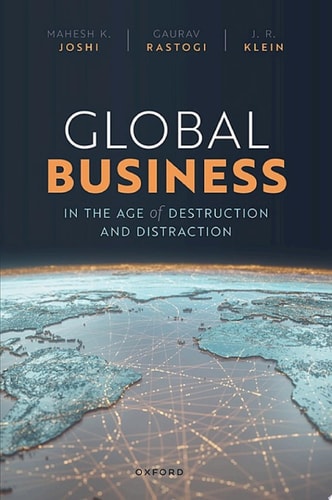
Global Business in the Age of Destruction and Distraction
0
0
As an Amazon Associate and affiliate partner, Menrva Books earns from qualifying purchases. Learn more
Author Description
When a crisis like a pandemic sweeps through societies, it upends critical structures in health, economics, socioeconomics, institutional cultures, communities, and everyday life. This book examines how a world already stressed by rampant change reacts to a global crisis. It draws on experts that foresee a growing economic inequality as the tech-savvy pull further ahead of those with less access to digital tools, training, or aptitude. Some anticipate big technology firms that will exploit their market advantages and weaponize tools that erode the privacy and autonomy of their users. Some predict that changes exacerbated by the pandemic will result in significant portions of the population benefiting from reforms aimed at racial justice and social equity as critiques of current economic arrangements, and capitalism itself, gain support and policymaker attention. The authors examine the complexities and realities of a world filled with distraction and how focus is diverted during a time of primary technological revolution. These patterns are destroying old thinking models and establishing new paradigms. This conversation takes time to investigate voice, tools, and strategies for coping and remaining relevant in the middle of the whirlwind.
Menrva's Summary
THE THESIS
This book investigates how global crises, specifically the COVID-19 pandemic, accelerate structural shifts in economics, technology, and social equity while challenging traditional business paradigms. The authors, J. R. Klein, Mahesh K. Joshi, and Gaurav Rastogi, synthesize expert perspectives to analyze the widening gap between tech-literate populations and those lacking digital access. They argue that current technological revolutions, combined with systemic crises, are dismantling established institutional models and forcing a re-evaluation of capitalism and social justice frameworks.
THE SCOPE MAP
What You Will Find
- Analysis of economic inequality driven by digital disparity.
- Examination of the influence of large technology firms on user privacy and autonomy.
- Discussion on the intersection of social equity reforms and economic policy.
- Strategies for maintaining organizational relevance during periods of rapid disruption.
Scope Limits
- The text does not provide a comprehensive historical account of all global pandemics.
- It does not offer a singular, prescriptive manual for individual career management.
THE AUTHORITY PERSPECTIVE
Experts identify this work as a relevant synthesis for professionals navigating the intersection of digital transformation and social instability. Readers frequently note the analytical density of the prose, which serves as a framework for understanding contemporary market volatility.
Page Count:
237
Publication Date:
2022-01-01
Publisher:
OUP Oxford
ISBN-10:
0192662791
ISBN-13:
9780192662798
Business
Economics
Technology
Sociology
Management
International - Accounting
Globalization
Community Tags
Similar Books