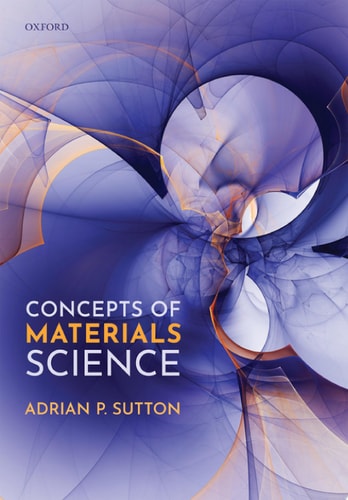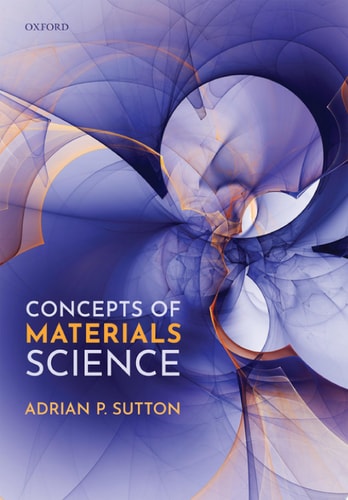
Concepts of Materials Science
0
0
As an Amazon Associate and affiliate partner, Menrva Books earns from qualifying purchases. Learn more
Author Description
All technologies depend on the availability of suitable materials. The progress of civilisation is often measured by the materials people have used, from the stone age to the silicon age. Engineers exploit the relationships between the structure, properties and manufacturing methods of a material to optimise their design and production for particular applications. Scientists seek to understand and predict those relationships. This short book sets out fundamental concepts that underpin the science of materials and emphasizes their relevance to mainstream chemistry, physics and biology. These include the thermodynamic stability of materials in various environments, quantum behaviour governing all matter, and active matter. Others include defects as the agents of change in crystalline materials, materials at the nanoscale, the emergence of new science at increasing length scales in materials, and man-made materials with properties determined by their structure rather than their chemistry. The book provides a unique insight into the essence of materials science at a level suitable for pre-university students and undergraduates of materials science. It will also be suitable for graduates in other subjects contemplating postgraduate study in materials science. Professional materials scientists will also find it stimulating and occasionally provocative.
Menrva's Summary
THE THESIS
This book investigates the fundamental principles that govern the structure, properties, and behavior of materials across various scientific disciplines. Adrian P. Sutton, a recognized expert in the field, synthesizes complex concepts from physics, chemistry, and biology to explain how material structure dictates performance. The text provides a framework for understanding how thermodynamic stability, quantum mechanics, and structural defects influence the development of both natural and man-made materials.
THE SCOPE MAP
What You Will Find
- Thermodynamic stability of materials in diverse environments
- Quantum mechanical foundations of matter
- Analysis of defects in crystalline structures
- Examination of materials at the nanoscale
- Discussion of man-made materials and structural properties
Scope Limits
- Does not provide an exhaustive technical manual for industrial manufacturing processes
- Focuses on conceptual foundations rather than applied engineering calculations
THE AUTHORITY PERSPECTIVE
Readers frequently note that the prose is accessible to undergraduates while remaining intellectually rigorous enough for professionals. Experts highlight the book as a concise, high-level synthesis that successfully bridges the gap between basic physics and advanced materials science applications.
Page Count:
842
Publication Date:
2021-01-01
Publisher:
OUP Oxford
ISBN-10:
0192661582
ISBN-13:
9780192661586
Science
Academic
Earth Sciences
Physics
Chemistry
Engineering