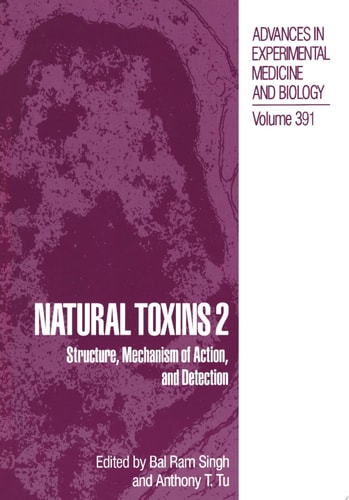
Natural Toxins: Structure, Mechanism of Action, and Detection
0
0
As an Amazon Associate and affiliate partner, Menrva Books earns from qualifying purchases. Learn more
Author Description
From beach encounters, aquaculture perils, and processed-food poisoning to snake bites and biological warfare, natural toxins seem never to be far from the public's sight. A better understanding of toxins in terms of their origin, structure, structure-function relation ships, mechanism of action, and detection and diagnosis is of utmost importance to human and animal food safety, nutrition, and health. In addition, it is now clear that many of the toxins can be used as scientific tools to explore the molecular mechanism of several biological processes, be it a mechanism involved in the function of membrane channels, exocytosis, or cytotoxicity. Several of the natural toxins have also been approved as therapeutic drugs, which has made them of interest to several pharmaceutical companies. For example, botulinum neurotoxins, which have been used in studies in the field of neurobiology, have also been used directly as therapeutic drugs against several neuromus cular diseases, such as strabismus and blepherospasm. Toxins in combination with modem biotechnological approaches are also being investigated for their potential use against certain deadly medical problems. For example, a combination of plant toxin ricin and antibodies is being developed for the treatment of tumors. The great potential of natural toxins has attracted scientists of varying backgrounds-pure chemists to cancer biologists-to the study of fundamental aspects of the actions of these toxins.
Menrva's Summary
THE THESIS
The study of natural toxins is crucial for understanding food safety, health, and their potential as scientific and therapeutic tools. This book delves into the origin, structure, structure-function relationships, mechanism of action, and detection of natural toxins, addressing their relevance from everyday encounters to potential biological warfare. It highlights how toxins can serve as valuable scientific instruments for exploring biological processes and have even been developed into therapeutic drugs, attracting interest from pharmaceutical companies and scientists across various disciplines.
THE SCOPE MAP
- Detailed exploration of the structure and mechanism of action of various natural toxins.
- Discussion of the role of natural toxins in food safety, nutrition, and human/animal health.
- Examination of toxins as scientific tools for investigating molecular biological processes, including membrane channels, exocytosis, and cytotoxicity.
- Overview of natural toxins approved as therapeutic drugs and their applications, such as botulinum neurotoxins for neuromuscular diseases.
- Investigation into the potential use of toxins in combination with biotechnological approaches for treating medical problems, including cancer therapy with ricin and antibodies.
- Coverage of detection and diagnostic methods for natural toxins.
THE AUTHORITY PERSPECTIVE
The book addresses the multifaceted importance of natural toxins, from their impact on public health and food safety to their emerging roles in scientific research and therapeutic development. The authors explore the intricate details of toxin structure, function, and mechanisms, providing a comprehensive overview for a diverse scientific audience. The text emphasizes the dual nature of toxins, highlighting both their potential dangers and their significant benefits when harnessed for medical and research purposes. This work is positioned as a valuable resource for chemists, biologists, and pharmaceutical researchers interested in the fundamental aspects and applications of natural toxins.
Page Count:
548
Publication Date:
2012-12-06
Publisher:
Springer Science & Business Media
ISBN-10:
1461303613
ISBN-13:
9781461303619
Science
Non-Fiction
Medicine
Toxicology
Biochemistry
Community Tags
Other Editions(3)

Similar Books

Reader Comments
Share Your Thoughts
No comments yet. Be the first to share your thoughts!