Forgotten Caves of Bisbee, Arizona: A Review of the History and Genesis of These Unique Features
0
0
As an Amazon Associate and affiliate partner, Menrva Books earns from qualifying purchases. Learn more
Author Description
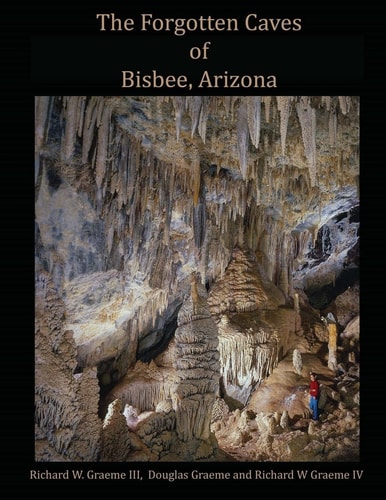
During the last part of the 19th century miners at the booming mining camp at Bisbee in the Arizona Territory began finding natural caves. These caverns were more than the typical calcite and aragonite filled openings stained by iron and manganese oxides. These caverns contained substantial amounts of malachite, azurite, rosasite and even cuprite. As a result the caverns were at times the formations were colored in deep greens and blues. It was learned that these caves formed as the result of the sugergene (oxidation) alteration of sulfides. The book begins with the history of local cave discoveries and then becomes more technical as it examines the speleology and mineralogy.
Menrva's Summary
THE THESIS
This book investigates the historical discovery and geological formation of unique natural caves found in Bisbee, Arizona. The authors detail the history of local cave discoveries, beginning in the late 19th century when miners in the booming Bisbee mining camp encountered these natural formations. Unlike typical caverns, these contained substantial amounts of malachite, azurite, rosasite, and cuprite, coloring the formations in deep greens and blues. The book then transitions to a more technical examination of the speleology and mineralogy, explaining that these caves formed as a result of the supergene (oxidation) alteration of sulfides.
THE SCOPE MAP
- Historical accounts of early cave discoveries in Bisbee, Arizona.
- Detailed examination of the mineralogy, including malachite, azurite, rosasite, and cuprite.
- Explanation of the geological processes, specifically supergene (oxidation) alteration of sulfides.
- Speleological analysis of the unique cave features.
- Focus on the visual characteristics of the caves, such as their deep green and blue coloration.
THE AUTHORITY PERSPECTIVE
This work appears to be a specialized study focusing on the geological and historical aspects of Bisbee's caves. Its detailed examination of mineralogy and speleology suggests it is aimed at geologists, mineral collectors, and local history enthusiasts. The technical nature of the content indicates a thorough exploration of the subject matter for a dedicated readership.
Page Count:
176
Publication Date:
2016-03-10
Publisher:
Copper Czar Publishing
ISBN-10:
0692690883
ISBN-13:
9780692690888
Non-Fiction
History
Science
Geology
Mineralogy
Mining History
Community Tags
Similar Books