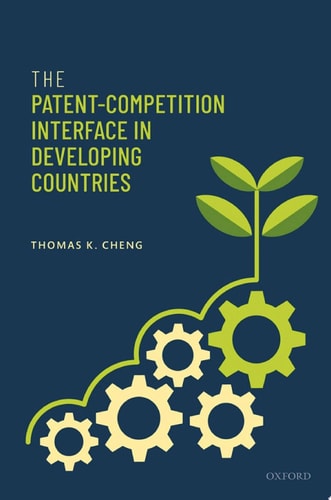
The Patent-Competition Interface in Developing Countries
0
0
As an Amazon Associate and affiliate partner, Menrva Books earns from qualifying purchases. Learn more
Author Description
This book proposes an approach to the patent-competition interface for developing countries. It puts forward a theoretical framework after canvassing relevant policy considerations and examines the many reasons why patent protection is not essential for generating innovation incentives in developing countries. These include the tendency of the patent system to overcompensate innovators, the availability of other appropriation mechanisms for innovators to monetize their innovations, and the lack of appropriate technological capacity in many developing countries to take advantage of the incentives generated by the patent system. It also argues that developing countries with a small population need not pay heed to the impact of their patent system on the incentives of foreign innovators. It then proposes a classification of developing countries into production countries, technology adaptation countries, and proto-innovation countries and argues that dynamic efficiency considerations take on different meanings for developing countries depending on their technological capacities. For the vast majority of developing countries bereft of meaningful innovation capacity, foreign technology transfer is the main vehicle for technological progress. The chief dynamic policy consideration for these countries is hence incentives for technology transfer instead of innovation incentives. There are three main means of voluntary technology transfer: importation of technological goods, foreign direct investment, and technology licensing. Competition law regulation of patent exploitation practices interacts with these three means of technology transfer in different ways and an appropriate approach to the patent-competition interface for these countries needs to take these into account. Distilling all these considerations, the book proposes a development stage-specific approach to the patent-competition interface for developing countries. The approach is then applied to a number of patent
Menrva's Summary
THE THESIS
This book investigates how developing countries should structure the interface between patent protection and competition law to maximize technological progress. Thomas K. Cheng, an expert in competition law, constructs a theoretical framework that challenges the universal applicability of Western patent models. He argues that for many developing nations, the primary policy goal should be the facilitation of technology transfer rather than the incentivization of domestic innovation, which may be hindered by existing technological capacity gaps.
THE SCOPE MAP
What You Will Find
- A classification system for developing countries based on technological capacity: production, technology adaptation, and proto-innovation.
- Analysis of the interaction between competition law and voluntary technology transfer mechanisms like foreign direct investment and licensing.
- Evaluation of patent overcompensation and alternative appropriation mechanisms for innovators.
Scope Limits
- The text does not provide a universal policy prescription, focusing instead on a development stage-specific approach.
- It does not cover the legal intricacies of patent litigation in developed economies.
THE AUTHORITY PERSPECTIVE
Legal scholars and economists frequently cite this work as a critical contribution to the discourse on intellectual property rights in the Global South. Experts highlight the book's utility in providing a nuanced, tiered framework for policymakers navigating the complexities of international trade and domestic technological growth.
Page Count:
536
Publication Date:
2021-01-01
Publisher:
OUP Oxford
ISBN-10:
0192671766
ISBN-13:
9780192671769
Economics
Competition Law
Law
International Development
Intellectual Property
Professional Career & Trade
Community Tags
Other Editions(2)
Similar Books












Reader Comments
Share Your Thoughts
No comments yet. Be the first to share your thoughts!