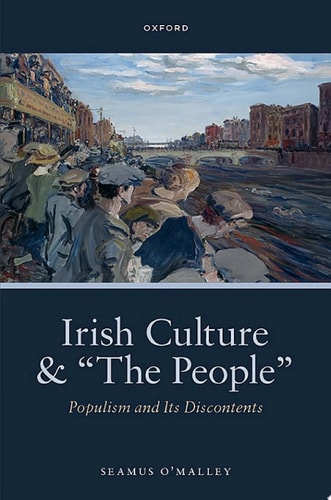
Irish Culture and The People: Populism and its Discontents
0
0
As an Amazon Associate and affiliate partner, Menrva Books earns from qualifying purchases. Learn more
Author Description
This book argues that populism has been a shaping force in Irish literary culture. Populist moments and movements have compelled authors to reject established forms and invent new ones. Sometimes, as in the middle period of W.B. Yeats's work, populism forces a writer into impossible stances, spurring ever greater rhetorical and poetic creativity. At other times, as in the critiques of Anna Parnell or Myles na gCopaleen, authors penetrate the rhetoric fog of populist discourse and expose the hollowness of its claims. Yet in both politics and culture, populism can be a generative force. Daniel O'Connell, and later the Land League, utilized populist discourse to advance Irish political freedom and expand rights. The most powerful works of Lady Gregory and Ernie O'Malley are their portraits of The People that borrows from the populist vocabulary. While we must be critical of populist discourse, we dismiss it at our loss. This study synthesizes existing scholarship on populism to explore how Irish texts have evoked "The People"--a crucial rhetorical move for populist discourse--and how some writers have critiqued, adopted, and adapted the languages of Irish populisms.
Menrva's Summary
THE THESIS
This book investigates how populism has functioned as a primary catalyst for innovation and critique within Irish literary culture. Author Seamus O'Malley utilizes a synthesis of existing political scholarship and close readings of canonical Irish texts to argue that populist discourse is a generative, albeit complex, force. By examining the rhetorical construction of "The People," the study demonstrates how writers have both adopted and dismantled populist language to navigate Ireland's political and social evolution.
THE SCOPE MAP
What You Will Find
- Analysis of populist rhetoric in the works of W.B. Yeats, Lady Gregory, and Ernie O'Malley.
- Critiques of populist discourse by figures such as Anna Parnell and Myles na gCopaleen.
- Historical context regarding the political influence of Daniel O'Connell and the Land League.
- A theoretical framework for identifying "The People" as a rhetorical device in literature.
Scope Limits
- The study does not provide an exhaustive history of Irish political parties.
- It focuses primarily on literary and rhetorical manifestations rather than contemporary electoral data.
THE AUTHORITY PERSPECTIVE
Scholars and critics recognize this work as a significant contribution to the intersection of Irish political history and literary analysis. Readers frequently note the academic density of the prose and the author's ability to bridge the gap between political theory and aesthetic critique.
Page Count:
489
Publication Date:
2022-01-01
Publisher:
OUP Oxford
ISBN-10:
0192674242
ISBN-13:
9780192674241
History
English & College Success
English
Literary Criticism
Irish Studies
Community Tags
Similar Books