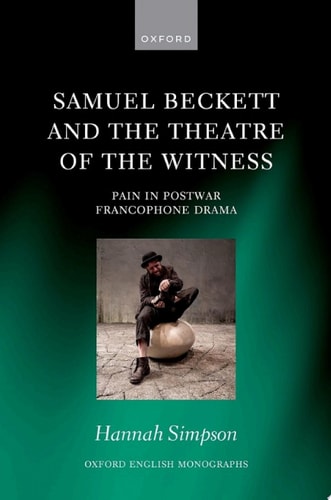
Samuel Beckett and the Theatre of the Witness: Pain in Post-War Francophone Drama
0
0
As an Amazon Associate and affiliate partner, Menrva Books earns from qualifying purchases. Learn more
Author Description
Samuel Beckett and the Theatre of the Witness explores Beckett's representation of physical pain in his theatre plays in the long aftermath of World War II, emphasising how the issues raised by this staging of pain speak directly to matters lying at the heart of his work: the affective power of the human body; the doubtful capacity of language as a means of communication; the aesthetic and ethical functioning of the theatre medium; and the vexed question of intersubjective empathy. Alongside the wartime and post-war plays of fellow Francophone writers Albert Camus, Eugène Ionesco, Pablo Picasso, and Marguerite Duras, this study resituates Beckett's early plays in a new conceptualising of le théâtre du témoin or a 'theatre of the witness'. These are plays concerned with the epistemological and ethical uncertainties of witnessing another's pain, rather than with the sufferer's own direct experience. They raise troubling questions about our capacity to comprehend and respond to another being's pain. Drawing on an interdisciplinary framework of extant criticism, recorded historical audience response, theatre and affect theory, and medical understandings of bodily pain, Hannah Simpson argues that these plays do not offer any easily negotiable encounter with physical suffering, pushing us to recognise the very 'otherness' of another being's pain, even as it invades our own affective sphere. In place of any comforting transcendence or redemption of endured pain, they offer a starkly sceptical, even pessimistic probing of what it is to witness another's suffering.
Menrva's Summary
THE THESIS
This study investigates how Samuel Beckett and his contemporaries utilized the theatre medium to represent physical pain and the ethical complexities inherent in witnessing the suffering of others in the post-World War II era. Hannah Simpson, a scholar in theatre and performance studies, employs an interdisciplinary approach that synthesizes historical audience reception, affect theory, and medical perspectives on bodily pain. The work argues that these plays deliberately avoid offering redemptive or easily digestible portrayals of suffering, instead forcing the audience to confront the epistemological distance between the witness and the sufferer.
THE SCOPE MAP
What You Will Find
- A conceptual framework for 'le théâtre du témoin' or 'theatre of the witness'.
- Comparative analysis of Beckett alongside Camus, Ionesco, Picasso, and Duras.
- Integration of medical history and affect theory to analyze bodily representation.
- Examination of historical audience responses to post-war dramatic works.
Scope Limits
- The analysis is primarily restricted to Francophone drama in the post-war period.
- The study does not provide a comprehensive biography of the playwrights involved.
THE AUTHORITY PERSPECTIVE
Scholars and students of modern drama frequently identify this text as a rigorous contribution to Beckettian studies and the broader field of performance ethics. Experts highlight the author's ability to bridge the gap between medical history and theatrical aesthetics, making it a significant resource for those examining the intersection of trauma and performance.
Page Count:
200
Publication Date:
2022-01-01
Publisher:
OUP Oxford
ISBN-10:
019267787X
ISBN-13:
9780192677877
Philosophy
Academic
European
English
Literary Criticism
English & College Success
Theatre History
Drama Studies
Community Tags
Similar Books