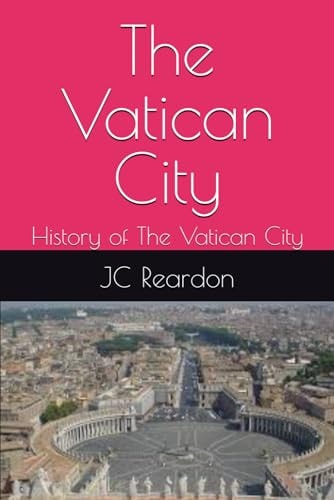
The Vatican City History of The Vatican City
0
0
As an Amazon Associate and affiliate partner, Menrva Books earns from qualifying purchases. Learn more
Author Description
Vatican City: The Smallest Country in the World Vatican City is an independent city-state and the spiritual and administrative headquarters of the Roman Catholic Church. It is the world's smallest country, both in area (44 hectares or 110 acres) and population (around 800 residents). Despite its size, it has significant religious, cultural, and political influence. 1. Historical Background Ancient Rome & Early Christianity: Vatican City is built on what is believed to be the burial site of Saint Peter, one of Jesus' apostles and the first pope. During the early Christian period, many Christians were persecuted in Rome, including Peter, who was crucified upside down. Emperor Constantine the Great later built St. Peter's Basilica in the 4th century CE over his tomb. Papal States (8th-19th Century): For centuries, popes ruled over a vast region in central Italy called the Papal States. These territories were politically and militarily significant but were eventually absorbed into Italy during its unification in the 19th century. Creation of Vatican City (1929): In 1870, Italian troops took control of Rome, and the Pope lost political authority over the Papal States. This led to tensions between the Catholic Church and the Italian government. The dispute was finally resolved with the Lateran Treaty (1929), signed by Pope Pius XI and Italy's leader Benito Mussolini, officially establishing Vatican City as an independent state. 2. Key Features of Vatican City St. Peter's Basilica: One of the holiest Catholic churches, home to Michelangelo's Pietà and the tomb of St. Peter. Sistine Chapel: Famous for Michelangelo's frescoes, including The Creation of Adam and The Last Judgment. Apostolic Palace: The Pope's official residence
Menrva's Summary
THE THESIS
The Vatican City History of The Vatican City investigates the historical development and key features of the world's smallest independent state. The book traces its origins from ancient Rome and early Christianity, through the era of the Papal States, to its official establishment in 1929 via the Lateran Treaty. It details significant landmarks such as St. Peter's Basilica, the Sistine Chapel, and the Apostolic Palace, providing insight into the religious, cultural, and political significance of this unique entity.
THE SCOPE MAP
- Historical Background: Ancient Rome & Early Christianity, Papal States (8th-19th Century), Creation of Vatican City (1929)
- Key Features: St. Peter's Basilica, Sistine Chapel, Apostolic Palace
- Religious, cultural, and political significance of Vatican City
- Details on the Lateran Treaty (1929) and its impact
THE AUTHORITY PERSPECTIVE
This work appears to be a comprehensive historical overview of Vatican City, suitable for readers interested in religious history, European history, or the unique status of microstates. The detailed historical background and description of key features suggest an informative and educational text. The subject matter points to a text that will likely cover significant events and landmarks with factual accuracy.
Page Count:
290
Publication Date:
2025-04-01
Publisher:
Amazon Digital Services LLC - Kdp
ISBN-13:
9798316428236
Religion
Travel
Non-Fiction
History
Community Tags
Similar Books