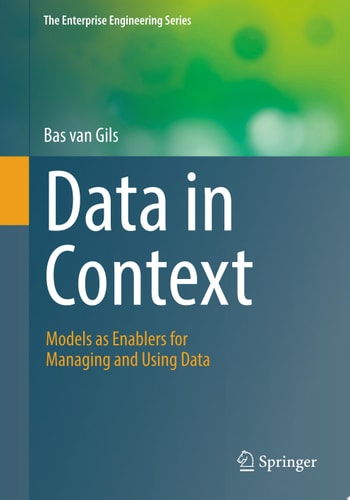
Data in Context
0
0
As an Amazon Associate and affiliate partner, Menrva Books earns from qualifying purchases. Learn more
Author Description
Data is an increasingly important asset for many organizations. This book shows how to model data in a way that allows to exploit this asset effectively and in every respect. To this end, it combines and exploits scientific (semiotics, relational model, etc.) and pragmatic theories (most prominently: the DAMA wheel) and provides a coherent overview from a business and an IT/ICT perspective. After a brief introduction, the remaining book consists of three parts. In Part I “Data”, the focus is on understanding data. It includes theories in semiotics, the relational model, and normalization, as well as related theories around understanding data/designing sound data structures. This part is complemented by an extensive chapter on how to design effective data structures and a smaller one on the topic of create versus use context. Part II “Data Management” then focuses on managing data as an asset. This part is based on the DMBOK and each of the functional areas is discussed in a separate chapter. Part III “Parting Thoughts” presents conclusions which are based on a synthesis of Part I and Part II, leading up to a summary of the main contributions of this book as well as a critical reflection on these results. This book is written for a rather broad audience, ranging from professionals to students, both from business, computer science, and information management. The writing style is adjusted specifically for these groups. At the end of each chapter reflection questions are included that distinguish between questions for practitioners and for students and help both audiences to benefit from the book and check their comprehension.
Menrva's Summary
THE THESIS
This book investigates how to effectively model data as a valuable organizational asset by integrating scientific and pragmatic theories. The author, Bas van Gils, combines perspectives from semiotics, the relational model, and the DAMA wheel to provide a comprehensive overview for both business and IT professionals. The book is structured into three parts: understanding data through theoretical frameworks and design principles, managing data as an asset using DMBOK functional areas, and concluding with a synthesis of these concepts and critical reflections. It is written for a broad audience, including professionals and students in business, computer science, and information management, with reflection questions tailored for practitioners and students at the end of each chapter.
THE SCOPE MAP
- Theories in semiotics, the relational model, and normalization for understanding data.
- Guidance on designing effective data structures and understanding create versus use context.
- Coverage of the DAMA-DMBOK functional areas for managing data as an asset.
- A synthesis of data understanding and data management principles.
- Critical reflection on the book's contributions and results.
- Reflection questions for practitioners and students at the end of each chapter.
THE AUTHORITY PERSPECTIVE
The book is designed for a broad audience, including professionals and students from business, computer science, and information management, with a writing style adjusted accordingly. Reflection questions are included at the end of each chapter, specifically distinguishing between those for practitioners and those for students to aid comprehension and application. The structure progresses from foundational data understanding to practical data management, culminating in a synthesized reflection on the material presented. This approach suggests a text aimed at bridging theoretical knowledge with practical application in the field of data management.
Page Count:
217
Publication Date:
2023-07-31
Publisher:
Springer Nature
ISBN-10:
3031355393
ISBN-13:
9783031355394
Non-Fiction
Science & Technology
Business
Data Modeling
Information Management
Computer Science
Community Tags
Similar Books