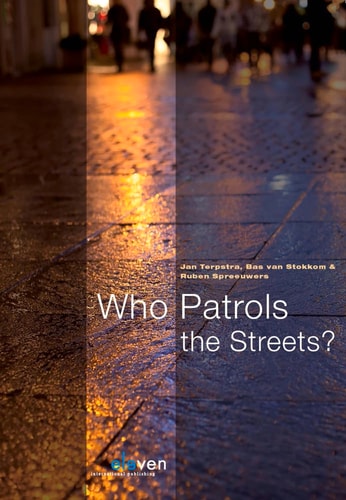
Who Patrols the Streets? An International Comparative Study of Plural Policing
0
0
As an Amazon Associate and affiliate partner, Menrva Books earns from qualifying purchases. Learn more
Author Description
Over the past 20 years, in many areas of the world, a new division of responsibilities has arisen in the management of crime and disorder. Public security is no longer considered to be the task of the police alone. Other agencies, both public and private, have increasingly become involved in preventing and combating nuisance, social disorder, and crime. Who Patrols the Streets? is based on an international comparative study on the pluralization of policing in a number of countries: Canada, England/Wales, the Netherlands, Austria, and Belgium. New uniformed officers are to be found in all these countries, with names - such as surveillance officer, community guard, warden, support officer, and municipal patroller - that differ as much as their uniforms, equipment, legal powers, social status, or relations with the public police. For each of these countries, an analysis is presented of these new forms of policing in the (semi) public space. What circumstances contributed to it? What are the positive and negative consequences of this plural policing? The book presents an analysis of the main similarities and differences in plural policing between these jurisdictions. A typology is presented of the different forms of non-police providers of policing in the public space. Several models are presented that are relevant for the debate on the future policy and organization of non-police policing.
Menrva's Summary
THE THESIS
The traditional monopoly of state police on public security has fragmented, leading to a complex landscape of public and private actors involved in crime prevention and disorder management. This book examines the international phenomenon of 'plural policing,' analyzing its emergence and manifestations across Canada, England/Wales, the Netherlands, Austria, and Belgium. It investigates the circumstances that fostered this shift, the diverse forms these new policing roles take, and their positive and negative consequences. The study aims to identify similarities and differences in plural policing across these jurisdictions and proposes models for future policy and organization.
THE SCOPE MAP
- An analysis of the pluralization of policing in Canada, England/Wales, the Netherlands, Austria, and Belgium.
- Examination of new uniformed officers such as surveillance officers, community guards, wardens, support officers, and municipal patrollers.
- Detailed description of the uniforms, equipment, legal powers, social status, and public relations of these new policing roles.
- Analysis of the circumstances that led to the rise of plural policing in each country.
- Assessment of the positive and negative consequences of this shift in public security provision.
- A comparative study highlighting similarities and differences in plural policing across the selected jurisdictions.
- A typology of different forms of non-police providers of policing in the public space.
- Presentation of models relevant to the debate on the future policy and organization of non-police policing.
THE AUTHORITY PERSPECTIVE
This comparative study offers a detailed examination of the evolving landscape of public security, focusing on the increasing involvement of non-state actors in policing. The research provides a structured analysis of plural policing across several European countries and Canada, identifying key trends and variations. It aims to contribute to academic discourse and policy development regarding the future organization and regulation of these diverse policing functions. The work is likely to be of interest to academics, policymakers, and professionals in the fields of criminology, sociology, and public administration.
Page Count:
172
Publication Date:
2013-01-01
Publisher:
Eleven International Publishing
ISBN-10:
9462360790
ISBN-13:
9789462360792
History
Politics
Non-Fiction
Public Administration
Sociology
Comparative Studies
Criminology
Community Tags
Similar Books