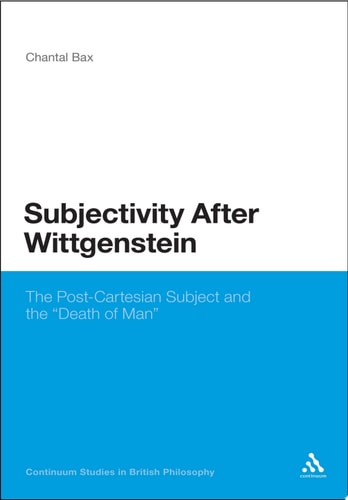
Subjectivity After Wittgenstein
0
0
As an Amazon Associate and affiliate partner, Menrva Books earns from qualifying purchases. Learn more
Author Description
Although Wittgenstein is often held co-responsible for the so-called death of man as it was pronounced in the course of the previous century, no detailed description of his alternative to the traditional or Cartesian account of human being has so far been available. By consulting several parts of Wittgenstein's later oeuvre, Subjectivity after Wittgenstein aims to fill this gap. However, it also contributes to the debate about the Cartesian subject and its demise by discussing the criticism that the rethinking of subjectivity received, for it has been argued that the anti-Cartesian turn in continental philosophy has lead to a loss of a centre for both ethics and politics. By further exploring the implications of the Wittgensteinian account of human being, this book makes it clear that a non-Cartesian view on the subject is not necessarily ethically and politically inert. Moreover, it argues that ethical and political arguments should not automatically take precedence in a debate about the nature of man.
Menrva's Summary
THE THESIS
This book investigates Ludwig Wittgenstein's alternative to traditional accounts of human subjectivity and its implications for ethics and politics. Chantal Bax examines Wittgenstein's later works to construct a detailed description of his non-Cartesian view of the human being, filling a gap in existing scholarship. The book also engages with criticisms that the rejection of the Cartesian subject has led to a loss of ethical and political grounding. Bax argues that a Wittgensteinian perspective on subjectivity is not ethically or politically inert and challenges the automatic precedence of ethical and political arguments in discussions of human nature.
THE SCOPE MAP
- Analysis of Wittgenstein's later philosophical works.
- Exploration of a non-Cartesian account of human subjectivity.
- Discussion of the critique that anti-Cartesian philosophy leads to ethical and political deficits.
- Argument for the ethical and political relevance of Wittgensteinian subjectivity.
- Examination of the relationship between the nature of man and ethical/political considerations.
- Contribution to the debate on the demise of the Cartesian subject.
THE AUTHORITY PERSPECTIVE
The book offers a detailed examination of Wittgenstein's perspective on subjectivity, aiming to provide a comprehensive account of his alternative to traditional Cartesian views. It addresses contemporary philosophical debates concerning the implications of this shift for ethics and politics, arguing against the notion that a non-Cartesian subject is necessarily devoid of ethical or political significance. The work seeks to clarify the potential of Wittgensteinian thought to inform these crucial areas of human concern.
Page Count:
208
Publication Date:
2011-03-31
Publisher:
Bloomsbury UK
ISBN-10:
1441170308
ISBN-13:
9781441170309
Philosophy
Non-Fiction
Continental Philosophy
Ethics
Community Tags
Similar Books