Biblical Heroes and Classical Culture in Christian Late Antiquity
0
0
As an Amazon Associate and affiliate partner, Menrva Books earns from qualifying purchases. Learn more
Author Description
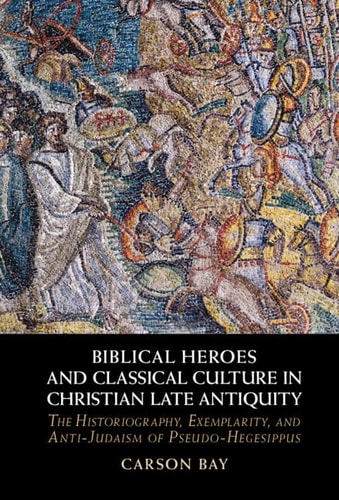
In this volume, Carson Bay focuses on an important but neglected work of Late Antiquity: Pseudo-Hegesippus' On the Destruction of Jerusalem (De Excidio Hierosolymitano), a Latin history of later Second Temple Judaism written during the fourth century CE. Bay explores the presence of so many Old Testament figures in a work that recounts the Roman-Jewish War (66-73 CE) and the destruction of Jerusalem in 70 CE. By applying the lens of Roman exemplarity to Pseudo-Hegesippus, he elucidates new facets of Biblical reception, history-writing, and anti-Judaism in a text from the formative first century of Christian Empire. The author also offers new insights into the Christian historiographical imagination and how Biblical heroes and Classical culture helped Christians to write anti-Jewish history. Revealing novel aspects of the influence of the Classical literary tradition on early Christian texts, this book also newly questions the age-old distinction between the Christian and the Classical (or 'pagan') in the ancient Mediterranean world.
Menrva's Summary
THE THESIS
This volume investigates the reception of biblical figures and classical culture within Christian Late Antiquity, focusing on Pseudo-Hegesippus's 'On the Destruction of Jerusalem'. Carson Bay examines how this fourth-century CE Latin history of Second Temple Judaism, which recounts the Roman-Jewish War and the destruction of Jerusalem, incorporates Old Testament figures. By analyzing the text through the lens of Roman exemplarity, Bay reveals new dimensions of biblical reception, anti-Judaism, and Christian historiography. The book further explores the Christian historiographical imagination and the role of biblical heroes and classical culture in shaping anti-Jewish narratives, challenging the traditional separation between Christian and Classical traditions in the ancient Mediterranean.
THE SCOPE MAP
- Analysis of Pseudo-Hegesippus's 'On the Destruction of Jerusalem' (De Excidio Hierosolymitano)
- Focus on the fourth-century CE Christian reception of later Second Temple Judaism
- Application of Roman exemplarity to biblical reception and history-writing
- Exploration of anti-Judaism in early Christian texts
- Insights into the Christian historiographical imagination
- Examination of how biblical heroes and classical culture informed anti-Jewish history
- Discussion of the influence of the Classical literary tradition on early Christian texts
- Re-evaluation of the distinction between Christian and Classical (pagan) in the ancient Mediterranean
THE AUTHORITY PERSPECTIVE
This scholarly work delves into a specific, yet significant, text from Late Antiquity, offering a detailed analysis of its historical and cultural context. The book's focus on Pseudo-Hegesippus and its application of Roman exemplarity suggest a rigorous academic approach to understanding early Christian historiography and its relationship with classical culture. It promises to shed new light on the construction of anti-Jewish narratives and the complex interplay between religious and classical traditions in the formative period of the Christian Empire.
Page Count:
452
Publication Date:
2022-11-24
Publisher:
Cambridge University Press
ISBN-10:
1009268562
ISBN-13:
9781009268561
Religion
Non-Fiction
History
Christianity
Late Antiquity
Community Tags
Similar Books