Immersion, Identification, and the Iliad
0
0
As an Amazon Associate and affiliate partner, Menrva Books earns from qualifying purchases. Learn more
Author Description
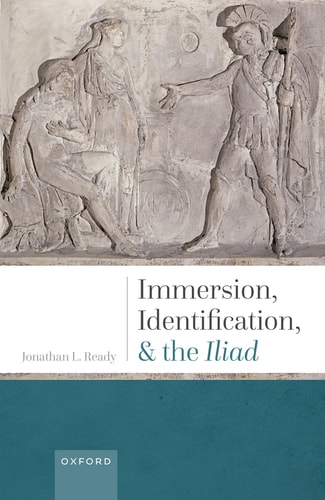
Intro -- Title Page -- Copyright Page -- Dedication Page -- Preface -- Acknowledgments -- Contents -- 1. Introduction -- 1.1. Overview -- 1.2. Terminology -- 1.3. Previous Scholarship -- 1.4. Outline Of Chapters -- Part I: Identification And The Iliad -- 2. The Study Of Identification -- 2.1. Overview -- 2.2. The Components Of Identification -- 2.3. The Triggers For Identification -- 2.4. Ancient Precedents For A Study Of Identification -- 2.5. Character And Emotional Identification -- 2.6. Conclusion -- 3. Prompts For (a Study Of ) Identifying With Characters -- 3.1. Overview -- 3.2. Recurring Features -- 3.3. Internal Narrators And Identification -- 3.4. Conclusion -- 4. Identification With Mortals And Gods -- 4.1. Overview -- 4.2. Identification With Mortals -- 4.3. Identification With Gods -- 4.4. Limits To Identification -- 4.5. The Politics Of Identification -- 4.6. Conclusion -- Part Ii: Immersion And The Iliad -- 5. Ancients And Moderns On Immersion -- 5.1. Overview -- 5.2. Ancient Precedents For A Study Of Immersion -- 5.3. Modern Studies Of Immersion -- 5.4. Conclusion -- 6. Spatial And Spatio-temporal Immersion -- 6.1. Overview -- 6.2. Spatial Immersion -- 6.3. Spatio-temporal Immersion -- 6.4. Conclusion -- 7. Emotional Immersion -- 7.1. Overview -- 7.2. Suspense -- 7.3. Other Emotions -- 7.4. Conclusion -- 8. Content And Form -- 8.1. Overview -- 8.2. Inner Life -- 8.3. Ourselves -- 8.4. Formal Features -- 8.5. Conclusion -- 9. Conclusion -- Works Cited -- Index Of Greek Passages -- Index Of Terms Jonathan L. Ready. Description Based Upon Print Version Of Record. Electronic Reproduction. Ann Arbor, Mi Available Via World Wide Web.
Menrva's Summary
THE THESIS
How do the formal and narrative structures of the Iliad facilitate reader engagement through the psychological mechanisms of identification and immersion? Jonathan L. Ready, a scholar of classical literature, synthesizes modern cognitive narratology with ancient rhetorical theory to examine how Homeric epic constructs a bridge between the audience and the characters. He argues that the poem utilizes specific linguistic and structural prompts to manage the reader's emotional and spatial orientation within the narrative world.
THE SCOPE MAP
What You Will Find
- A theoretical framework for analyzing character identification in oral epic poetry.
- Analysis of spatial, spatio-temporal, and emotional immersion techniques.
- Comparative study of ancient and modern theories regarding reader engagement.
Scope Limits
- The analysis is restricted to the text of the Iliad and does not extend to the Odyssey or other Homeric hymns.
- The study focuses on narrative mechanics rather than historical or archaeological context.
THE AUTHORITY PERSPECTIVE
Scholars in the field of classical studies identify this work as a significant application of cognitive narratology to Homeric texts. Readers frequently note the academic density of the prose, which serves as a rigorous examination of how ancient epic functions as a psychological experience.
Page Count:
0
Publication Date:
1900-01-01
Publisher:
Oxford University Press,
ISBN-10:
0192698656
ISBN-13:
9780192698650
Narratology
Lecture
Literature
Homer
Literary Criticism
Reading Psychology of
Community Tags
Other Editions(3)

Similar Books









Reader Comments
Share Your Thoughts
No comments yet. Be the first to share your thoughts!