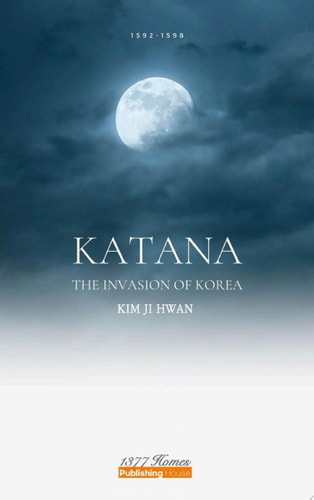
Katana: The Katana Invasion of Korea
0
0
As an Amazon Associate and affiliate partner, Menrva Books earns from qualifying purchases. Learn more
Author Description
In all three countries, the conflict had far-reaching implications. From the viewpoint of Japanese imperialism, the invasions are viewed as Japan's first attempt to become a global power. In the late nineteenth and early twentieth centuries, Japanese officials exploited the 1592–1597 invasions to legitimize their twentieth-century annexation of Korea. Throughout the nineteenth and twentieth centuries, Yi-Sun Sin's triumphs influenced Japanese naval captains, several emphasizing the significance of understanding his warfare skills in order to develop their navy. The struggle was used politically in China during the twentieth century to foment anti-Japanese nationalism. Chinese historians categorized the battle as one of the Wanli Emperor's "Three Great Punitive Campaigns." Contemporary Chinese historians frequently cite the campaigns as evidence of China's benevolence toward Korea. In Korea, like in China, the fight laid the historical groundwork for Korean nationalism, inspiring and exploiting nationalist opposition to Japanese imperialism throughout the twentieth century. Throughout the fight, Korea gained several national heroes, most notably Yi Sun-sin and Chen Lin (founder of the Gwangdong Jin clan). Anti-Japanese attitudes are pervasive in contemporary Korea, stretching all the way back to the 1592 Japanese invasions. During Japan's rule of Korea from 1910 to 1945, Koreans had to deal with a lot of hardships. This is mostly because of that.
Menrva's Summary
THE THESIS
The Imjin War's Enduring Legacy on East Asian Geopolitics. This book examines the profound and lasting impact of the 1592-1597 Japanese invasions of Korea, known as the Imjin War, on Japan, China, and Korea. It details how Japan leveraged these conflicts to assert its global ambitions and how Korean naval hero Yi Sun-sin's tactics influenced naval development. The text also explores how China utilized the war to foster anti-Japanese nationalism and how Korea's resistance laid the foundation for its own national identity.
THE SCOPE MAP
- Analysis of the Imjin War's role in Japan's imperial ambitions.
- Exploration of Yi Sun-sin's naval strategies and their influence.
- The use of the conflict in 20th-century Chinese anti-Japanese nationalism.
- The war's significance as a foundation for Korean nationalism.
- Connection between the Imjin War and contemporary anti-Japanese sentiment in Korea.
- Discussion of the hardships faced by Koreans during Japan's colonial rule (1910-1945) as a consequence of historical conflicts.
THE AUTHORITY PERSPECTIVE
The book analyzes the Imjin War's significant role in shaping East Asian nationalisms and international relations. It highlights how historical narratives of this conflict were manipulated for political purposes in the 20th century by Japan, China, and Korea. The text emphasizes the enduring impact of the war on contemporary attitudes, particularly the pervasive anti-Japanese sentiment in modern Korea, linking it directly to the events of the late 16th century. The author's focus on the long-term geopolitical and nationalistic consequences provides a comprehensive perspective on this pivotal historical period.
Page Count:
219
Publication Date:
2022-03-16
Publisher:
1377Homes
ISBN-10:
8967843445
ISBN-13:
9788967843441
Non-Fiction
History
Military History
Asian History
Community Tags
Similar Books