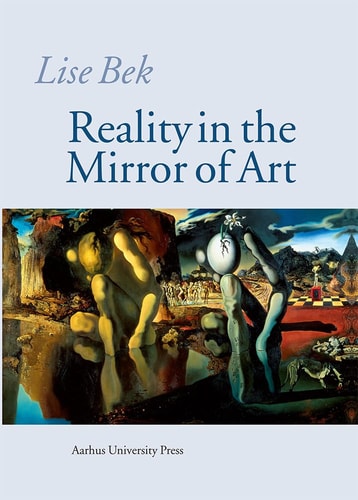
Reality in the Mirror of Art
0
0
As an Amazon Associate and affiliate partner, Menrva Books earns from qualifying purchases. Learn more
Author Description
To speak about the relationship between reality and art is like wanting to solve an equation with two unknowns. Nonetheless they are so closely bound up with each other that one is almost bound to mention the two quantities in the same breath. Is there much of a difference then between art and reality? For what is reality but what we make of it? With our cities and buildings, our tamed landscape and manifold utensils, with all the available remedies and media we shape reality at will, in our own image. This, however, is not true only of our concrete products. We form our reality also through the thoughts and ideas we have about ourselves and the world, and through the concepts by which we try to cope with it. Consequently all art must have its origin in a belief in the existence of reality whatever constitutes the kind of reality that the individual professes to see as his own. It is not, therefore, the intention in this volume to explore the universal laws of art and track down the imprint they have left on reality in the work of art. On the contrary, art will be seen as the means of expression which, due to its diversity and changeability, will always be the proper medium to capture the glimpse of the reality current at any given moment and preserve the picture of it in a more lasting, though not in a universally valid form.
Menrva's Summary
THE THESIS
This book investigates the intricate and often paradoxical relationship between artistic creation and the perception of reality. Lise Bek explores how art serves as a unique medium for capturing and preserving the transient nature of reality as it is understood at any given moment. The work posits that reality itself is a construct, shaped by human thought, ideas, and the concepts we use to navigate the world, and that art, in its diverse and mutable forms, is a primary means by which these subjective realities are expressed and understood.
THE SCOPE MAP
- Exploration of the philosophical underpinnings of reality and its connection to artistic representation.
- Analysis of how art reflects and shapes human perception of the world.
- Discussion on the role of concepts and ideas in constructing reality.
- Examination of art as a medium for capturing the 'glimpse of the reality current at any given moment'.
- Consideration of art's ability to preserve a picture of reality in a lasting, though not universally valid, form.
- The author's perspective on the inherent subjectivity of reality and its artistic interpretation.
THE AUTHORITY PERSPECTIVE
The book is likely to appeal to readers interested in art theory and philosophy, offering a nuanced perspective on how art engages with and reflects the concept of reality. The author's approach suggests a text that encourages deep contemplation on the nature of perception and creation. It is framed as an exploration of art's expressive power in capturing subjective truths. The work appears to be a scholarly examination rather than a popular overview.
Page Count:
400
Publication Date:
2004-05-01
Publisher:
Aarhus University Press
ISBN-10:
8772888601
ISBN-13:
9788772888606
Non-Fiction
Psychology
Philosophy
History
Art
Art History
Community Tags
Similar Books














