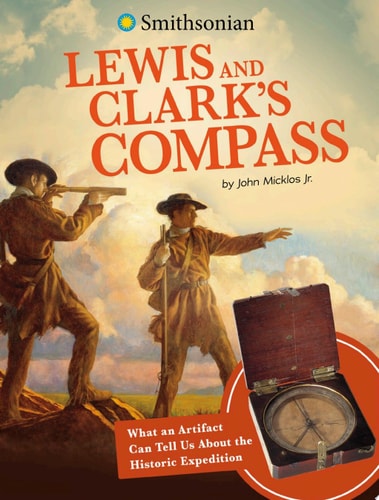
Lewis and Clark's Compass: What an Artifact Can Tell Us about the Historic Expedition
0
0
As an Amazon Associate and affiliate partner, Menrva Books earns from qualifying purchases. Learn more
Author Description
The Louisiana Purchase in 1803 nearly doubled the size of the United States. The U.S. suddenly went from consisting of 17 states along the Atlantic coast to claiming land as far west as present-day Montana. The U.S. government knew little about the terrain there. Was there a water route to the Pacific? President Thomas Jefferson sent William Clark and Meriwether Lewis to find out. With nothing to guide them but a compass, what would Lewis and Clark discover? Readers will find the answer to this question and how an artifact can tell us about U.S. history.
Menrva's Summary
THE THESIS
This book examines how a single artifact, Lewis and Clark's compass, can illuminate the challenges and discoveries of the historic expedition. The Louisiana Purchase dramatically expanded the United States, presenting President Thomas Jefferson with the need to understand the vast, unknown territories to the west. He commissioned Meriwether Lewis and William Clark to lead an expedition to explore this new domain, seeking a water route to the Pacific and gathering knowledge about the land and its inhabitants. This narrative focuses on the critical role of their compass as a tool for navigation and as a symbol of the expedition's reliance on rudimentary technology in uncharted wilderness.
THE SCOPE MAP
- The historical context of the Louisiana Purchase and its implications for the United States.
- The roles of Meriwether Lewis and William Clark as leaders of the expedition.
- The function and significance of the compass as a navigational tool for the explorers.
- Insights into the terrain, geography, and potential resources encountered.
- How artifacts can serve as primary sources for understanding historical events.
- The broader impact of the expedition on U.S. history and westward expansion.
THE AUTHORITY PERSPECTIVE
The book uses the compass as a focal point to explore the broader historical significance of the Lewis and Clark expedition. It aims to provide readers with an understanding of the challenges faced by the explorers and how such artifacts offer tangible connections to the past. The narrative likely emphasizes the importance of historical objects in understanding pivotal moments in American history. The approach suggests an accessible yet informative exploration of a key event through a unique lens.
Page Count:
48
Publication Date:
2021-01-01
Publisher:
Capstone
ISBN-10:
1496696824
ISBN-13:
9781496696823
Non-Fiction
History
American History
Exploration
Community Tags
Similar Books














