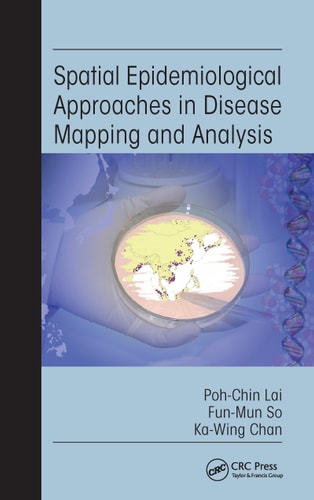
Spatial Epidemiological Approaches in Disease Mapping and Analysis
0
0
As an Amazon Associate and affiliate partner, Menrva Books earns from qualifying purchases. Learn more
Author Description
Use of GIS applications in the medical community is not a new concept by any means. But the ability to apply GIS technology on a wide scale is often hampered by the sophistication and complexity of the methodology and the limited access to affordable software. Spatial Epidemiological Approaches in Disease Mapping and Analysis illustrates the utilities of freeware using real-world data and leads users down the logical decision-making path toward developing spatial-statistical relationships. This internationally reputable guide brings instructional clarity to its treatment of spatial-statistical techniques, subjecting epidemiological data to statistical rigor and advanced methodological testing. With the help of a vivid color insert, this book illustrates the applications of GIS in examining non-contagious (asthma and dengue) and contagious (SARS) diseases, making it applicable to any public health condition on any scale. This example-filled resource: Documents how GIS can be applied in examining disease occurrences from the spatial perspective, Includes links to freeware so disease occurrence data can be examined for spatial randomness, dependencies, patterns, and trends, Allows for a variety of downloadable freeware to practice spatial analysis, like GeoDa, CrimeStaf, and Health Mapper, This landmark work follows a truly interdisciplinary model, capturing the complexity of GIS for the non-specialist in a ready-to-implement way and spotlighting the global challenge of analyzing public health concerns in a geographical context. Book jacket.
Menrva's Summary
THE THESIS
This book investigates how Geographic Information Systems (GIS) can be practically applied to disease mapping and analysis, particularly using accessible freeware. The authors, internationally reputable experts, aim to bridge the gap between the complexity of GIS methodology and its application in the medical community. They demonstrate how to develop spatial-statistical relationships using real-world data, making advanced techniques accessible to non-specialists. The book covers the examination of both contagious and non-contagious diseases, offering a framework applicable to any public health concern.
THE SCOPE MAP
- Demonstrates the application of GIS in examining disease occurrences from a spatial perspective.
- Provides links to freeware for analyzing disease occurrence data for spatial randomness, dependencies, patterns, and trends.
- Includes downloadable freeware examples such as GeoDa, CrimeStaf, and Health Mapper for practicing spatial analysis.
- Illustrates GIS applications in examining non-contagious diseases (asthma, dengue) and contagious diseases (SARS) using a vivid color insert.
- Presents a truly interdisciplinary model for analyzing public health concerns within a geographical context.
- Offers instructional clarity on spatial-statistical techniques and advanced methodological testing of epidemiological data.
THE AUTHORITY PERSPECTIVE
This book is presented as an internationally reputable guide that brings instructional clarity to spatial-statistical techniques in epidemiology. It is designed to make the complexity of GIS accessible to non-specialists, offering a ready-to-implement approach to analyzing public health concerns geographically. The inclusion of freeware links and real-world data examples suggests a practical and hands-on resource for public health professionals and researchers. The book's interdisciplinary model aims to address the global challenge of disease analysis in a geographical context.
Page Count:
204
Publication Date:
2020-06-30
Publisher:
CRC Press
ISBN-10:
0367577496
ISBN-13:
9780367577490
Science
Non-Fiction
Medical research
Data Analysis
Public Health
Epidemiology